• Skip to primary navigation
  • Skip to main content
  • Skip to primary sidebar
  • Skip to footer
Next Stage – Social Impact Services

Next Stage - Social Impact Services

Social good strategy to amplify your impact

  • Who we are
  • What we do
  • Who we serve
  • Resources
    • Impact Stories
    • News & Insights
  • Contact
  • Newsletter
  • fb
  • in
  • ins

Nonprofit Leadership

Collaboration in Crisis: Why We Need Each Other More Than Ever

March 7, 2025 by joshjacobson

The nonprofit and social impact sector is bracing for a new kind of crisis — one driven not by a sudden disaster, but by the slow erosion of federal funding for health, human services, and conservation efforts. The trickle-down effect will be widespread, creating a chain reaction of funding realignments, unexpected shortfalls, and increased competition for limited resources.

For many organizations, these budget shifts won’t be a distant concern — they’ll be an immediate existential threat. Many providing direct services will find themselves forced to justify their existence, making the case for why food access should take priority over education, or why housing deserves investment over healthcare. But this is a false choice. These issues are not isolated — they are interconnected, part of what we at Next Stage call the social drivers of everything.

No single mission stands alone. The success of any individual — or an entire community — relies on the work of many. And that’s exactly why social good collaborations are no longer optional. They’re a necessity.

Crisis as a Catalyst for Collective Action

Next Stage is motivated to support collaboration for exactly this reason, and our work to advance collective efforts is becoming a bigger part of our company’s service offerings.

Given the importance of collaboration to the funding community, one might expect a more expansive body of evidence-based research advocating for it. The Sustained Collaboration Network makes a compelling case for social good collaborations in their 2024 report, Nurturing Nonprofit Collaborations: Insights for Philanthropic Funders. Of the 45 collaborations studied, 73% demonstrated quantifiable success, reinforcing the effectiveness of collective approaches.

Unfortunately, it often takes a crisis to bring people together to collaborate. When a hurricane decimates a community or an earthquake shakes the infrastructure of a city, the institutions positioned to help leap into action. No one is debating mission creep or defending their funding sources when a crisis is actively causing harm.

Our passion for collaboration was forged in the early days of the COVID-19 pandemic — another crisis that taught us a lot about the interrelationship of social impact. It proved the importance of neighborhood-level trust brokers — community-based organizations (CBOs) that serve as a critical bridge to ensuring the delivery of services (and vaccines) to disinvested community members uncertain of who to trust. Our communities were forever changed by the pandemic, with CBOs now firmly positioned as a critical link in the supply chain of social good.

The Next Crisis Is Already Here

The dismantling of America’s social safety net is happening with record speed. Government and nonprofit service providers alike are preparing for significant funding cuts that will negatively impact individuals living below the poverty line (and this is to say nothing of the global impact of dismantling USAID, but that is a blog for another time).

Like a rollercoaster approaching the zenith of its incline, we’re preparing ourselves for the uncertainty of the plummet still to come. If only we could transport ourselves a few years in the future where, with the benefit of hindsight, we’d be able to offer counsel to each other. We might share the following as advice:

  1. Leverage preexisting relationships. The hardest time to build trust is in the middle of a crisis. Your best bet is to tap into partners where there’s already a history of working together. That being said, if you haven’t yet mapped out your ecosystem of collaborators, now is the time. Identify organizations in your network with complementary missions and aligned values, and work to deepen those relationships. The strongest collaborations don’t start with formal agreements — they begin with mutual trust and a willingness to support one another.

  2. Develop your communication carefully. Organizations can fall into the trap of positioning their funding crisis as the main headline rather than the outcomes of their services. The sudden loss of funding makes for a compelling news story, but it typically doesn’t motivate generosity the way human-centered storytelling can. Donors, funders, and stakeholders need to understand the people behind the numbers — the lives changed, the impact made, and the ripple effects of the work. Now’s the time to refine messaging, ensuring that your organization’s value is clear, compelling, and easy to articulate.

  3. Manage for now, but plan for the future. While the need in front of us feels urgent and visceral, it’s important to take the long view. Your institution is likely going to need to manage change and make difficult decisions in the months and years to come. But keep in mind that an inspirational vision is among your most important assets. In times of uncertainty, people follow leaders who offer more than just stability — they follow those who can paint a picture of what’s possible. Even as you navigate immediate financial challenges, stay focused on the bigger picture. What does success look like five years from now? How can your organization evolve to meet the changing landscape?


A Time for Collaboration, Not Competition

We’re approaching an inflection point. The months ahead will test organizations in ways they may not yet fully understand. But if there’s one lesson to be learned from past crises, it’s this: no one wins by going it alone.

No single mission is most important, because the success of any service provider is dependent on the work of others. Collaboration is not just a strategy for survival — it’s the best way to drive meaningful, sustainable impact.

This isn’t the time for territorialism or scarcity mindsets. It’s a moment to double down on partnerships, lean into collective solutions, and recognize that our greatest strength has always been — and will always be — each other. The question isn’t whether collaboration is necessary. The question is whether we’ll embrace it before the crisis forces us to, and if the lessons learned will lead to a permanent change to how social good gets done.


Want the latest social good trends, insights, and inspiration delivered straight to your inbox? Subscribe to the Impact Insider today!
Filed Under: Nonprofit Leadership, Thought Leadership

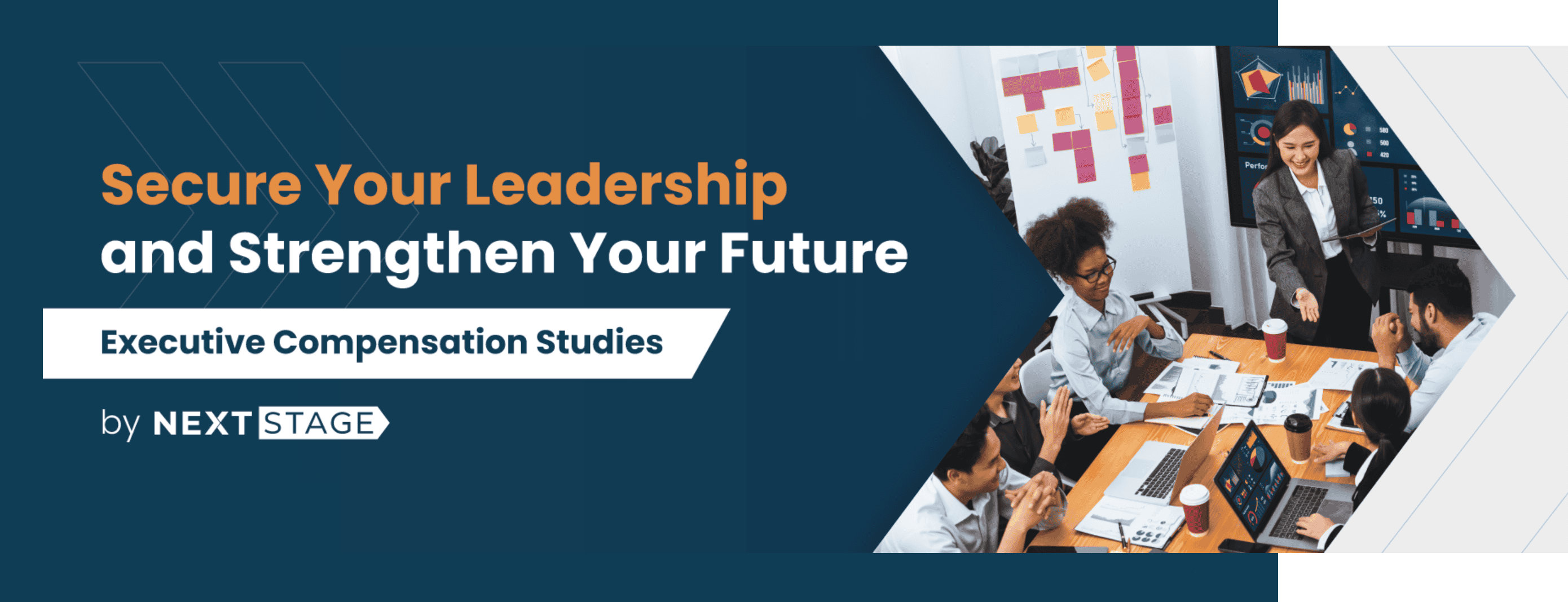
Executive Compensation for Nonprofit Leaders: A Critical Moment

February 7, 2025 by joshjacobson

The world of social good is a bit upside down right now. The federal spending freeze announced early last week set in motion a flurry of communications from current and past Next Stage clients, all seeking clarity on what it meant and how to navigate it. While the Office of Management and Budget ultimately rescinded the proposed payments pause, the writing is firmly on the wall—be prepared.

These conversations reminded us yet again how challenging the role of executive leadership in the nonprofit sector is today. The COVID-19 pandemic had a beleaguering effect on administrators who needed to care for their staff members and volunteers while keeping their mission focus alive. And now, just as the world seemed to be getting back to normal, new federal policy directions are throwing them another massive curveball.

We feel for these leaders and want to recognize their importance at this critical juncture in history.

Retention Strategies in Times of Stress

Once upon a time, Next Stage offered executive search as a core service line, conducting as many executive searches as strategic planning efforts. This has since moved to more of a “secret menu item” for client engagements where we’re more deeply involved (like our recent sourcing of Kristine Urrutia as Catawba Nation Foundation’s inaugural Executive Director).

But through our extensive experience in executive search, we identified a significant gap in local data around executive compensation for nonprofit leaders. In response, we created an in-depth community report in 2020 to help address this issue.

The Charlotte-Mecklenburg Nonprofit Executive Compensation Study provided detailed insight into compensation by sector, revenue size, and number of employees, offering key data on base compensation, benefits, and pay-for-performance. While information like this existed at the statewide and national levels, no one had done a deep dive into the data on a local level.

In the years since the report’s release, we’ve received regular inquiries from board chairs and nonprofit leaders about its findings. This ongoing need for local and organization-specific data led us to launch an Executive Compensation Study service line. Through this offering, we provide custom recommendations and analysis for organizations looking to design an executive director retention strategy.

We’re reminded of this work now as nonprofit leaders face an uncertain future. We feel strongly that they deserve our advocacy at a time when they would have us focus instead on the people their organizations serve.

Read on to learn more about retention strategies your organization can implement to help support your leadership during turbulent times.

Nonprofit Leadership in Times of Crisis

Nonprofit executives are navigating a landscape of increasing complexity, where economic uncertainty, shifting public policy, and evolving donor expectations place extraordinary demands on their leadership. These professionals must balance mission-driven work with operational sustainability, all while ensuring their organizations remain resilient in the face of external pressures. 

As these challenges mount, so does the need for organizations to examine how they can best support and retain their leaders.

Avoid Self-Advocacy in the Budgeting Process

Nonprofit CEOs often face the difficult position of advocating for their own compensation while balancing other organizational needs. This challenge is exacerbated when the budgeting process begins with the CEO, who submits an initial draft to the Executive Committee of the Board of Directors. 

The need for transparency and fairness in executive compensation is more urgent than ever. Selflessness is in the nonprofit DNA, with leaders putting the needs of others ahead of their own. This frequently manifests in CEOs prioritizing salary increases for staff over their own compensation, leading to long-term retention challenges. We’ve seen time and again how nonprofit administrators sacrifice personal financial security in favor of sustaining their teams—an expectation that’s neither sustainable nor fair.

A recent article by the Maine Association of Nonprofits emphasizes developing a transparent compensation philosophy. Such a philosophy not only demonstrates the critical role of staff retention in advancing the organization’s mission but also holds decision-makers accountable to guidelines grounded in organizational values, rather than market data alone. This approach equips staff with information that supports self-advocacy and broader organizational accountability.

Sync Executive Assessment to a Strategic Plan

How is your organization’s chief administrator performing? Our take on this hasn’t changed: nonprofit boards lacking strong executive assessment methodology struggle to set compensation fairly, tending to “keep up with the Joneses” rather than compensate for outstanding performance.  

Aligning the executive assessment process with the organization’s strategic plan is essential for ensuring leadership efforts directly contribute to overarching goals. A quality strategic plan will outline objectives across programming, operations, and resource development, complete with measurable targets. By basing executive assessment metrics directly on the strategic plan, there’s a clear understanding of how the CEO achieves desired outcomes and creates measurable impact in their role. This must be adjusted during times of crisis, revisiting these goals against the backdrop of change. 

Nonprofit boards should also consider incorporating pay-for-performance bonuses. According to a survey by BDO USA, 42% of nonprofit organizations now include annual incentives or bonuses as part of their compensation packages for executive directors—a statistic that matches Next Stage’s local findings of 39% back in 2020. This marks a continued shift toward performance-based compensation, reflecting a desire to align executive pay more closely with organizational goals and outcomes.

Scrutiny from the Outside

Media interest in nonprofit salaries tends to be cyclical, often producing sensationalist headlines that frame executive compensation as excessive. A recent Charlotte Observer article (“See who is making millions at 15 top nonprofits”) exemplifies this trend, highlighting salaries without broader context about the complexity of nonprofit leadership. While transparency is critical, these stories often reinforce the false narrative that nonprofits should underpay their leaders—despite the immense responsibility they carry in ensuring organizational success, financial sustainability, and impact.

It has always baffled me that leaders working to make the world a better place are penalized for earning fair compensation while corporate executives are encouraged to earn millions—even when their work sometimes runs counter to social good. This dynamic not only affects how the public perceives nonprofit executives but also discourages top talent from pursuing or remaining in leadership roles.

Instead of perpetuating these misleading narratives, we should advocate for fair compensation structures that recognize the expertise, dedication, and leadership required to sustain mission-driven organizations.

A Call for Change

Nonprofit leaders are at the center of social impact, yet they continue to navigate an uphill battle when it comes to fair compensation. As we look ahead, we must address this imbalance head-on, ensuring that executive compensation for nonprofit leaders reflects the value these individuals bring to their organizations and communities.

This is particularly true now as we face an uncertain future and what will likely be years of policy shifts that impact the nonprofit business model. 

For board members and stakeholders invested in organizational sustainability, the conversation about retention must include compensation. Now more than ever, it’s time to advocate for the leaders who dedicate their careers to building a better world.


Interested in a custom executive compensation study for your organization? Schedule a free consultation today to discuss your nonprofit’s unique needs.


Want the latest social good trends, insights, and inspiration delivered straight to your inbox? Subscribe to the Impact Insider today!

Filed Under: Nonprofit Leadership, Talent, Thought Leadership

4 Essential Best Practices for Strategic Planning in 2025

January 13, 2025 by joshjacobson

It’s a new year, and that means new opportunities for your organization to build a strategic roadmap.

Strategic planning is Next Stage’s cornerstone service line. It’s a process we’ve guided more than 100 organizations through—from nonprofits and community-based organizations to health care groups and government agencies. We understand the words “strategic planning” can elicit very different reactions: for some, the process is exciting and full of possibility, while for others, it’s a daunting or even cringe-worthy task.

In recent years, strategic planning in the social good sector has faced significant disruption. The lingering effects of the COVID-19 pandemic, combined with an uncertain political environment and the looming threat of economic recession, caused many organizations to shift to a “wait-and-see” mindset, opting to rely on short-term annual plans rather than committing to multiyear strategic roadmaps. According to one recent study, up to 49% of nonprofits lack a strategic plan.

However, as we enter 2025, the external landscape has begun to stabilize. We’re operating under a new federal administration, the economy has achieved relative stability, and advancements in technology are firmly taking hold. While challenges remain for institutions working to advance social good, we’re no longer navigating in the fog of ambiguity. The near-term future has become clearer—and with that clarity comes opportunity.

So, what now? The time has come to get proactive because developing a multiyear strategy has wide-ranging benefits. One study found that 86% of nonprofit respondents believed their strategic plan positively impacted revenue generation through grants, donors, events, and other avenues.

So whether you’re contemplating your first strategic plan or looking to refresh your approach, we’ve prepared a list of four best practices for strategic planning to help your organization create a roadmap that drives real impact.


1. Listen to Your Constituents

A microphone in front of an audience.

Market research is big business—a $150 billion global industry according to ESOMAR’s Global Market Research report. And with more sources of data than ever before thanks to advancements in technology and AI, there are seemingly endless opportunities to secure key constituent insights. 

That’s welcome news because regularly listening to your constituents is essential. Don’t make the all-too-common mistake of believing you already know what your key stakeholders are thinking, feeling, and experiencing. Conditions change over time, and so too do the needs and opportunities faced by the people critical to your institution’s success.

That’s why we always encourage our clients to use learnings gained by listening to their constituents to inform their operational direction. It’s more than worth the time investment because truly effective strategic planning must begin with robust primary research. This includes interviews, focus groups, surveys, and observational studies that gather diverse perspectives and insights.

And listening to your constituents shouldn’t just be a one-time thing. By regularly engaging in such activities, your organization will gain a pulse on changing needs, opportunities, and challenges. This ongoing process not only informs your strategy but also keeps it grounded in reality, making it more adaptive and actionable.


2. Include Stakeholders in Planning

A diverse group of people stand and sit around a planning table.

As we’ve shared before, Americans have a deepening mistrust of most institutions. According to Pew Charitable Trust’s 2024 report, confidence levels across sectors remain at or near historic lows, with only modest recovery since the pandemic’s onset.

​​Many organizational leaders mistakenly believe their organization is immune to this trend. But the reality is, even the most trusted institutions are feeling the impact of this broader erosion of public faith.

The good news is your organization’s strategic planning efforts present a key opportunity to reverse this trend. By making the process genuinely inclusive, you can build stronger strategies while fostering authentic stakeholder buy-in. When you bring together diverse voices—staff, board members, beneficiaries, and community partners—on your strategic planning task force, the resulting roadmap better reflects the full spectrum of perspectives and voices that matter to your organization’s success.

This sense of inclusion also fosters a sense of ownership among stakeholders, which is essential for successful implementation down the road.

The 2024 whitepaper “Nothing About Us Without Us,” which examines disability representation in media and branding, powerfully illustrates this concept. While focused on the disability community, the report’s central message resonates broadly: sustainable solutions emerge only when the communities we serve are active participants in designing their future.

Because true stakeholder inclusion isn’t just about gathering input—it’s about sharing power in the planning process itself.


3. Build Belonging Through Engagement

A group of people high-fiving.

Strategic planning is more than just charting a course—it’s an opportunity to deepen stakeholder investment in your institution’s future. When done well, it creates a compelling roadmap that inspires diverse groups to unite around shared goals and outcomes.

This has become particularly crucial amid what experts call a “crisis of belonging.” As highlighted in a 2024 Chronicle of Philanthropy article: “It’s not just marginalized populations and marginalized communities that feel a sense of not belonging; it’s also those who traditionally have been higher up in the societal hierarchy who feel they don’t belong.”

Your strategic planning process can help address this crisis by fostering genuine connection and shared purpose. But the work doesn’t end when the plan is complete. To build lasting bonds between your organization and its constituents, it’s essential to close the communication loop with everyone who contributed to the process.

Clearly communicate to stakeholders exactly how their input shaped the final plan. Make their impact visible. By acknowledging their role in shaping your organization’s future, you do more than just build transparency—you cultivate the trust and enthusiasm needed to turn strategic vision into reality.


4. Create a Launch Campaign

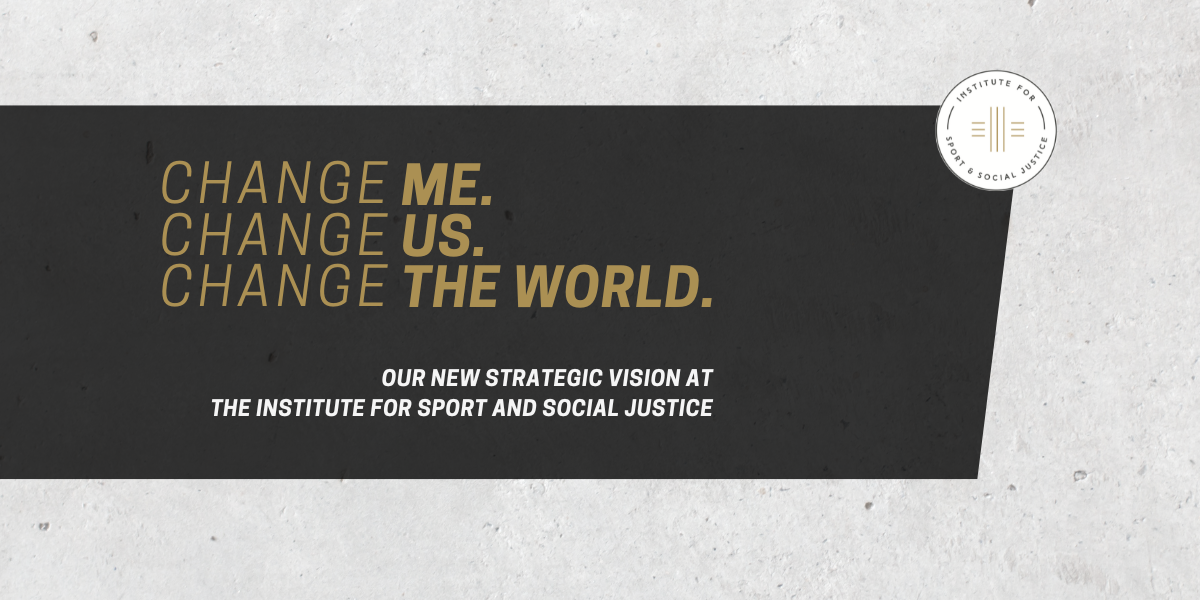
The image contains the text Change Me. Change Us. Change the World.

A strategic plan is only as powerful as its implementation. And all too often, this is where organizations stumble. In fact, according to an organizational diagnostic survey by BridgeSpan Group, staff members at more than 120 nonprofits rated their employers’ capacity to implement their strategies 10% below their average rating for all other organizational capability areas. Respondents gave their organizations especially low marks on their abilities to break down their strategies into actionable steps, communicate their vision effectively, allocate resources appropriately, and adapt to change.

To ensure successful implementation, launch your strategic plan with the energy and intentionality of a campaign. The Institute for Sport and Social Justice offers an inspiring example of this approach. Despite having a clear mission of advancing social justice through sport, they needed to unite their diverse programs under a cohesive narrative. Through Next Stage-facilitated strategic planning sessions, they developed the powerful campaign theme “Change Me. Change Us. Change the World.” This framework elegantly connected their four pillars of impact (Training & Education, Community & Youth, Global Engagement, and Knowledge Creation) into a compelling narrative that resonated with stakeholders at every level.

This campaign-style approach transforms strategic plans from static documents into dynamic forces for organizational change. When you develop a unifying theme that speaks to your stakeholders’ aspirations, your strategy becomes more than a roadmap—it becomes a rallying cry that energizes staff, inspires donors, and activates allies in pursuit of shared goals.


The time for strategic planning is now. As the external landscape stabilizes and new opportunities emerge, organizations need robust, multiyear strategies more than ever. And if the past few years have taught us anything, it’s that strategic planning should no longer be treated as a one-off exercise that happens every few years. Instead, it must become a core capability embedded into your organization’s adaptive DNA.

Is your organization looking to develop or amend its strategic plan in 2025?

Reach out today—we’d love to partner with you!


Want the latest social good trends, insights, and inspiration delivered straight to your inbox? Subscribe to the Impact Insider today!

Filed Under: Nonprofit Leadership, Planning & Implementation, Thought Leadership

5 Social Good Trends to Look for in 2025

December 10, 2024 by joshjacobson

It’s December which means the return of a Next Stage tradition—our annual look-ahead to the social good trends for the coming year!

Looking back at our predictions in 2022 and 2023, we feel good about how our previous forecasts unfolded—from recognizing the growing importance of community voice to the rise of digital communities of practice and the increasing role of corporate social responsibility in addressing workforce gaps.

To determine the top social good trends for 2025, we drew from rigorous third-party research and the frontline learnings we’ve gained from our collaborative partnerships with mission-driven organizations.

We’re profoundly grateful to all the nonprofits, corporations, and government entities who have entrusted us to partner with them this year to advance their social good efforts, allowing us to develop a nuanced understanding of the sector’s most pressing challenges and opportunities.

So, what do we think 2025 will hold? Let’s explore…


1. Federal Spending Cuts Will Disrupt Post-Pandemic Recovery

A federal building.

As federal budget cuts loom, the ripple effects will be felt at every level of the social good ecosystem. Federal funding represents a significant portion of state budgets, and reductions are likely to result in decreased revenue for local municipalities. These budgetary shortfalls will have an outsized impact on health and human service nonprofits, which are often the last line of defense for underserved communities.

The stakes are high. Many trusted community-based organizations lack the robust fundraising infrastructure needed to compete for increasingly scarce resources. This financial squeeze comes as pandemic recovery efforts remain incomplete, with critical social indicators—education, housing stability, and mental health—still struggling to return to pre-pandemic levels.

For these organizations—and the social good ecosystem as a whole—the challenge of meeting rising needs with fewer resources could be one of the defining struggles of 2025. What’s more, the ripple effects could also lead to long-term consequences for community resilience and the ability to address systemic inequities.

References:

  • Business perspectives: President Trump and the nonprofit sector. The Berkshire Edge (2024).
  • Commentary: The Stakes In Washington For Nonprofits In 2025. The NonProfit Times. (2024).
  • Opinion | Nonprofit groups are in the Trump administration’s crosshairs. MSNBC (2024).

2. Collaboration as an Imperative

A group of people around a table. They are all smiling and two are shaking hands.

Nonprofits and social service providers will face mounting pressure to work together more effectively in an era of diminished funding. Competition for resources often leads to fragmented efforts, with organizations prioritizing their own sustainability over the broader good. But siloed approaches risk creating gaps in services and duplicating efforts, which can ultimately harm the very populations they aim to serve.

But out of such challenges may come some silver linings.

At Next Stage, we’ve coined the term “the social drivers of everything” to emphasize the interconnected nature of the social safety net and its critical role in fostering economic mobility. Just as health outcomes depend on addressing social determinants like housing, education, and food security, the entire social sector benefits when organizations work collaboratively to align goals, pool resources, and innovate together.

In 2025, cross-organizational collaboration won’t just be an ideal—it will be a necessity. Expect to see service providers forming coalitions, pursuing shared funding opportunities, and leveraging partnerships to weather financial uncertainty while ensuring better outcomes for the communities they serve. Organizations that embrace transparency, open communication, and joint problem-solving will emerge stronger, demonstrating the power of sustained collaboration in addressing complex social challenges.

References:

  • Unlocking the Power of Sustained Collaboration. Sustained Collaboration Network (2024).
  • Bridging the Health Divide: The Social Drivers of Everything. Next Stage (2024).

3. An Innovation Turning Point for Philanthropy

A light bulb to symbolize innovation.

The pressure on philanthropy to fill shortfalls in social good budgets is set to intensify. But let’s be clear—philanthropy can’t single-handedly solve the problem. Government sources account for one of the largest portions of nonprofit revenue (31.8%) while foundations, corporations, and individual donors collectively contribute less than 15%. Asking philanthropy to bridge such a significant gap is like expecting a garden hose to extinguish a wildfire.

In this challenging environment, philanthropists face a pivotal choice: continue to provide stopgap funding for immediate needs or focus on driving innovation to address systemic challenges. A prolonged period of diminished resources will require a shift in how philanthropy operates. Simply maintaining the status quo won’t suffice—philanthropic efforts will need to take bold risks, prioritize systems change, and support initiatives that reimagine how social good is delivered.

Expect 2025 to usher in an era of philanthropic innovation, where funders experiment with new models such as collective impact grants, venture philanthropy, and capacity-building investments. These approaches, while not a cure-all, could catalyze the systemic transformation required to sustain the sector in the face of financial uncertainty.

References:

  • Report Predicts Uptick in Giving in 2024 and 2025. NonProfit Pro (2024).
  • Nonprofit Impact Matters: How America’s Charitable Nonprofits Strengthen Communities and Improve Lives. National Council of Nonprofits (2019).
  • Giving USA: U.S. charitable giving totaled $557.16 billion in 2023. Indiana University Indianapolis (2024).

4. Increased Focus on Social Cohesion

A nonprofit volunteer handing some food supplies to a woman in need.

In the aftermath of an election year marked by unprecedented division, the already-fragile relationship between service providers and the communities they serve is under even greater strain. This dynamic is particularly pronounced among those experiencing poverty—people who are inundated with politicized rhetoric while witnessing the dismantling of equity-focused systemic frameworks.

Rebuilding social cohesion will be a critical focus in 2025. Organizations must prioritize meaningful engagement, moving beyond transactional engagement approaches to build authentic connections grounded in trust, empathy, and mutual respect. This will require creative solutions, such as leveraging “prosocial media” initiatives (think YouTube’s Community Notes or Bluesky’s anti-toxicity tools), which are designed to foster inclusivity and constructive dialogue. These emerging features offer a hopeful counterbalance to traditional social media which often amplifies division and misinformation.

By embracing innovative communication tools and doubling down on community-centered strategies, social good organizations can begin to repair frayed societal bonds and foster a renewed sense of shared purpose. Trust will become a cornerstone of sustainable impact, influencing everything from program design to donor relations.

References:

  • Embrace the Shift to ‘Prosocial Media’. Wired (2024).
  • Community Voice: Passing Fad or Lasting Disruption? Next Stage (2024).

5. AI Makes Its Mark on Social Good

A graphic that shows the flow of new technologies working together.

How can any self-respecting prognosticator not include AI in a list of future trends? The tools we commonly refer to as “AI” are better described as advanced learning systems. These systems excel at processing vast amounts of data, identifying patterns, and automating tasks—essential capabilities for a social good sector that typically struggles with limited resources for data management, evaluation, and marketing.

AI has the potential to accelerate social impact while significantly reducing costs, a critical need in an era of diminishing resources. From predictive analytics to personalized outreach, these tools can help organizations optimize operations, improve outcomes, and do more with less. However, effective adoption of AI in the social good space is hindered by a lack of access to technology experts and infrastructure.

In 2025, we expect to see greater philanthropic investment in process improvement initiatives aimed at equipping service providers with AI-driven tools and insights. These efforts will likely extend beyond individual organizations, seeking to enhance the efficiency and effectiveness of entire ecosystems working toward common goals.

References:

  • Impactful AI: How tech leaders and social innovators are advancing AI for social good. World Economic Forum (2024).

—

Want the latest social good trends, insights, and inspiration delivered straight to your inbox? Subscribe to the Impact Insider today!

Filed Under: Corporate Impact, Nonprofit Leadership, Thought Leadership

Generosity as a Bridge: How Nonprofits Can Use Year-End Campaigns to Unify Supporters

November 20, 2024 by joshjacobson

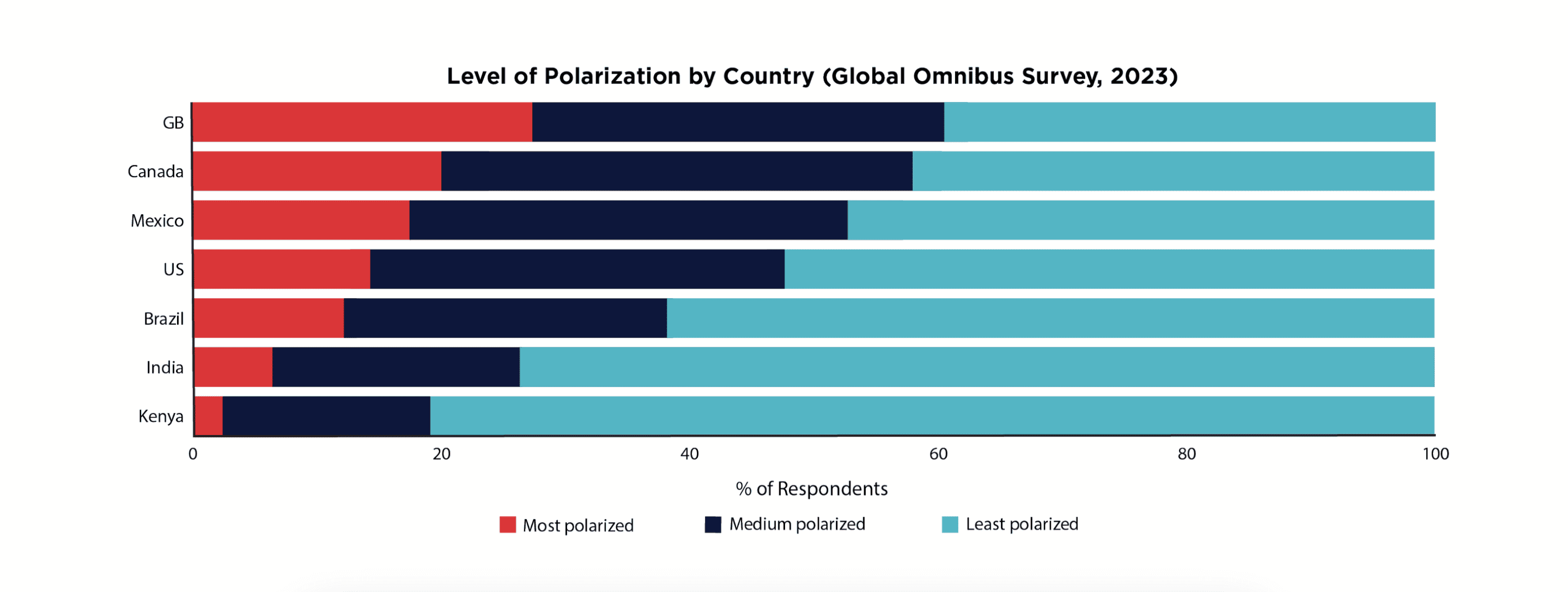
As the post-election dust settles, we wake in a world still deeply divided. Division and polarization continue to permeate our society, creating significant barriers to positive social and economic change.

It may feel as though this level of division is a uniquely American experience, but rising political and social divisions are a global challenge, threatening the foundations of community, trust, and cooperation worldwide. As noted in Giving Tuesday’s 2023 “Giving Bridge” trend report, many countries are grappling with fractured public landscapes, where conflicting viewpoints and values threaten to widen gulfs between people.

Source: The Giving Bridge: A Lookback at 2023 Trends in Global Generosity

But for U.S. nonprofits, these divisions present a unique challenge—and a unique opportunity. As Giving Tuesday and the year-end giving season approach, organizational leaders may wonder how to best appeal for support amid this highly polarized environment. How can they build strong, lasting connections with their communities when people’s trust in institutions, government—and each other—feels so frayed?

Recognizing Generosity as a Bridge

The nonprofit sector has an opportunity—and a responsibility—to play a role in bringing people together. Why?

Because nonprofits are uniquely positioned to bridge divides.

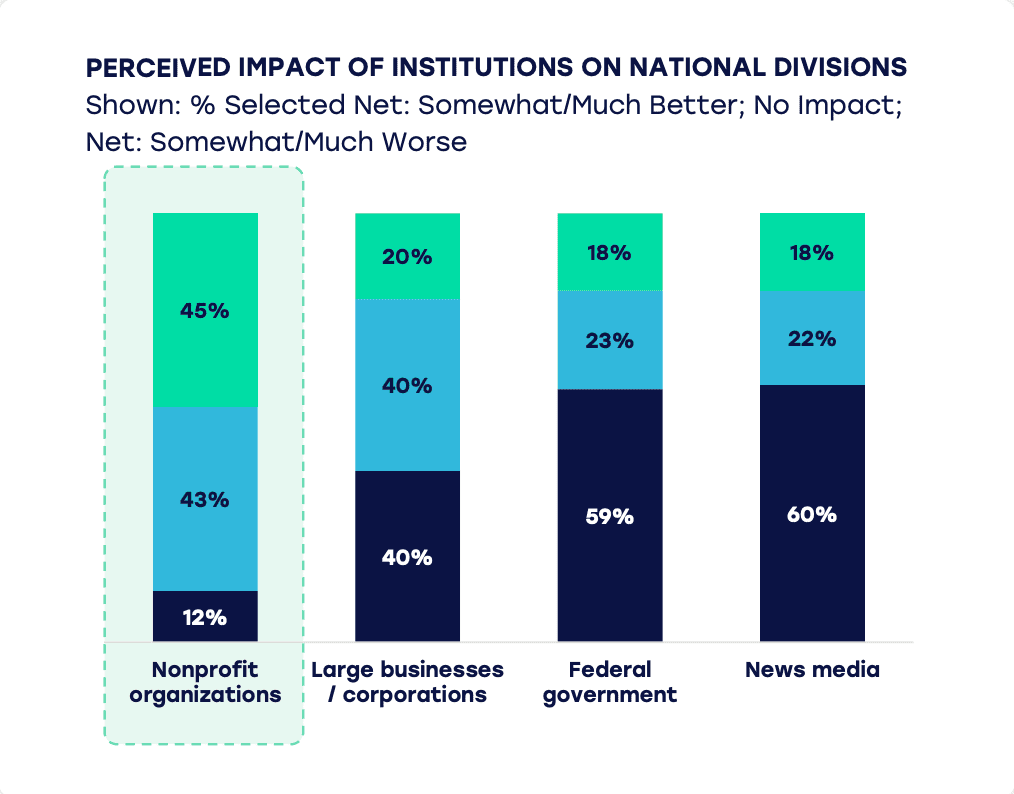
According to the Independent Sector’s 2024 report, Americans trust nonprofits more than corporations, the government, and the media when it comes to reducing national divisions. This trust empowers nonprofits to lean into their role as unifiers, offering people a path to connection rather than conflict. 

Source: Independent Sector, Trust in Nonprofits and Philanthropy

What’s more, Giving Tuesday’s report suggests that people are more willing to help others whose values or lifestyles may differ from their own when that connection is rooted in respect, care, and generosity.

These findings suggest that macro ideological differences tend to fall away when people are presented with opportunities to help others, especially through acts of giving and volunteerism.

And this powerful “giving bridge” concept—that generosity can act as a connector between people—is one that nonprofits are well-suited to embrace.

Creating a Giving Bridge in Your Year-End Campaign

Ahead of the upcoming season of giving, nonprofits can help mend divides by drafting messaging that advocates for common ground, community, and human connection.

Here are three strategies for creating more resonant, human-centered communications that invite donors to become part of something greater:

  • Shift the Narrative. Your nonprofit is not the “hero” of the story—your supporters are. Use your messaging to show donors they have the power to drive change through your work. Instead of focusing on your organization’s efforts, highlight how donors make a tangible difference, inviting them to be part of something bigger. At Next Stage, we design movement-building brand strategies, informed by the StoryBrand framework, that help nonprofits empower their supporters as the true heroes of their missions. Here’s how it works in practice:

Before: “We provided shelter to 500 families.“

After: “You helped 500 families find safety.“

By positioning donors as heroes, you transform fundraising into a shared journey, deepening their commitment and making them integral players in your mission—not just passive supporters. These human-centered appeals inspire lasting impact and reinforce the power of generosity.

  • Tell Empowering Stories. Move beyond storytelling that positions people’s hardships as the emotional drivers of your appeal. Instead, highlight the positive outcomes generosity creates—with an emphasis on empowerment rather than collective sympathy. Showcase stories that capture the strengths and achievements of the people your nonprofit supports, letting donors see the full picture of what their generosity enables through your programming. By focusing on outcomes and dignity, nonprofits can inspire support grounded in respect and shared humanity.
  • Build Belonging Between Your Supporters. Create opportunities for donors to feel a sense of belonging with your organization. In essence, aim to create a support community that embodies the giving bridge concept itself. Nonprofits often build one-to-one relationships with donors, but they rarely encourage donors to connect with each other. But by acting as a catalyst for cross-donor connections, nonprofits can nurture a vibrant and engaged philanthropic community united in shared purpose. Creating spaces for supporters to engage with one another—through local events, online platforms, or peer groups—can help them feel like they’re part of an impactful, values-driven network.

Healing Division Through Generosity

I know many of you may be feeling conflicted about the world and your nonprofit’s place in it. And it’s important to take the time to reflect and heal before recommitting to advancing social good and support for our communities.

But at a time when 94% of Americans are worried about growing divisions and a lack of national unity, we want nonprofit leaders to take heart knowing that their work is largely seen as part of the solution.

Source: Independent Sector, Trust in Nonprofits and Philanthropy

Our communities need the hope and human connection nonprofits can provide—not just through the programs they deliver but through their ability to build cultures of caring and generosity that transcend differences.

So nonprofit leaders, when you’re ready, I hope you’ll feel empowered to forge a path of new possibilities and opportunities.

Because your work matters—perhaps now more than ever.

Let this upcoming season of giving be a call to action. Step forward not only as providers of impactful programs but as catalysts for empathy, understanding, and unity.

Because we each hold the power to bridge divides—one act of generosity at a time.

—

Want the latest social good trends, insights, and inspiration delivered straight to your inbox? Subscribe to our monthly Impact Insider newsletter today!

Filed Under: Nonprofit Leadership, Thought Leadership

Championing Change: Next Stage’s Strategic Planning Project with the Institute for Sport and Social Justice

October 16, 2024 by nextstage

Last year, Next Stage proudly partnered with the Institute for Sport and Social Justice (‘the Institute’) on an expansive strategic planning engagement. The project ranked among Next Stage’s most visionary planning efforts, with the Institute’s leaders staking out a globally focused horizon for its social impact programming.

About the Institute for Sport and Social Justice

The Institute’s mission is to harness the power of sport to educate and empower leaders to create a safer, more equitable, and inclusive world. Founded by civil rights icon Dr. Richard Lapchick in 1985, the Institute has long been an innovative leader in leveraging sport as a platform for social change.

The Institute is perhaps best known for its Huddle Up program, working with university programs, professional sports teams, and leagues to deliver training on a continuum of topics including the following:

  • Diversity, Equity, Inclusion, and Belonging (DEIB)
  • Eradicating gender-based violence
  • The power of transformational leadership
  • Critical decision-making skills

Additional programs include the management of National Student-Athlete Day, PlayMakers of the Month, and Invisible Women in Sport. Signature events include the Giant Steps Awards Gala and the Hall of Fame Induction Ceremony.

The Need

Sporting events often serve as a platform for protest and social justice demonstrations. And, in today’s divisive and highly politicized climate, the Institute’s guiding principles and mission have never been more vital.

The Institute appointed Dr. Jeffrey O’Brien as its new CEO in 2022, transitioning leadership from its founder ahead of the organization’s 40th anniversary in 2025. With a staff and contractor team new to the organization, the time had come to engage in a multi-year strategic planning process to establish a roadmap ahead of the upcoming anniversary.

The Approach

Based in Central Florida, the Institute wasn’t familiar with Charlotte-based Next Stage. The organization reached out following a referral to learn more about the social innovation company’s strategic planning services. Next Stage was proud to step into the facilitator role for the Institute’s strategic planning process. The effort was led by CEO Josh Jacobson and Senior Director, Community Voice Helen Hope Kimbrough.

Jacobson and Kimbrough conducted a wide-ranging discovery process that included virtual planning sessions with a national task force and an in-person, multi-day retreat in Detroit and Ann Arbor, Michigan. These phases of work built buy-in with the Institute’s leadership and created a platform for creating a game-changing strategic plan.

According to Dr. O’Brien, this reimagining of the Institute’s pathway forward came at a critical time for the organization and its staff and board leadership.

“Over several decades, the Institute had led the way in creating human-centered standards within the sports industry,” O’Brien said. “To move forward, we needed to take stock of our history while carefully plotting a course for our future. Thanks to the work of Next Stage, we now have the renewed clarity and defined roadmap we need to put our new pillars into practice.”

The Impact

The Institute’s various programs and service lines all focus on the same central value proposition: advancing social justice through sport. But to bring current and future programs into cohesion, the Institute needed to develop a theory of change to help tell the story of how the individual programs work together to create impact.

Through Next Stage–facilitated planning sessions, the Institute originated the concept “Change Me. Change Us. Change the World.”

  • Change Me: We believe impact starts at the individual level. We educate and empower individuals to realize how they can make a positive difference.
  • Change Us: We aim to build a movement of individuals who take what they have learned to inspire and transform their local communities.
  • Change the World: We work with global partners to lift up and support their change-making efforts and advance equity, safety, and inclusion. The movement we envision emanates from individual and community-based action that, ultimately, will change the world.

This conceptualization helped to bring the Institute’s four pillars of impact (Training & Education; Community & Youth; Global Engagement; Knowledge Creation) into a connected framework, which set the stage for planning and ambition setting.

The result was a highly detailed strategic roadmap and implementation plan outlining a 3-year horizon toward a newly defined approach to the Institute’s work.

For Jacobson, Next Stage’s engagement with the Institute was a thrilling demonstration of the company’s capacity for supporting far-ranging impact.

“The Institute’s strategic plan is global in scope, placing the organization on the path to being a worldwide leader in creating a safer, more equitable, and inclusive world,” Jacobson said.

—

To learn more about the Institute for Sport and Social Justice and its impact, visit www.sportandsocialjustice.org.

To learn more about Next Stage’s strategic planning services, visit our website or reach out to Josh Jacobson at ceo@nextstage-consulting.com.

Filed Under: Nonprofit Leadership, Planning & Implementation

  • « Go to Previous Page
  • Page 1
  • Page 2
  • Page 3
  • Page 4
  • Page 5
  • Page 6
  • Go to Next Page »

Primary Sidebar

Footer

Subscribe to the Impact Insider

Your monthly roundup of social good news and trends

only_email

Who we are

What we do

Who we serve

resources

Newsletter

Careers

Let’s work together!

Contact Us

fb
in
ins

© 2026 Next Stage Consulting | All rights reserved | Privacy Policy