• Skip to primary navigation
  • Skip to main content
  • Skip to primary sidebar
  • Skip to footer
Next Stage – Social Impact Services

Next Stage - Social Impact Services

Social good strategy to amplify your impact

  • Who we are
  • What we do
  • Who we serve
  • Resources
    • Impact Stories
    • News & Insights
  • Contact
  • Newsletter
  • fb
  • in
  • ins

Corporate Impact

Trust-Based Philanthropy and “The UnFundable Project”: One Year Later

April 22, 2025 by Caylin

In the intricate landscape of nonprofit support, some of the most critical needs often go unnoticed. This is the story of how one innovative grant helped transform a dance organization’s future by embracing a radical approach to philanthropy.


Traditional grantmaking often constrains nonprofit leaders, forcing them into narrow funding categories that may not address their most pressing challenges. That’s why, in 2024, social innovation company Next Stage sought to change this narrative through a unique $10,000 grant initiative: The UnFundable Project.

The project emerged from the company’s steadfast belief in the power of trust-based philanthropy, a funding approach that encourages grantors to give nonprofit leaders more freedom in figuring out how to fulfill their missions. The initiative’s goal was to support the need of a nonprofit that fell outside conventional funding models.

The recipient of the inaugural award was Caroline Calouche & Co., a Charlotte-based arts organization that aims to build community through dance and circus arts. Their request? An essential but often overlooked need — funding to pay off a credit card used to replace a damaged sprung floor.

One year later, we caught up with the nonprofit’s founder and artistic director, Caroline Calouche, to learn about the impact of the grant and hear what’s next for the organization as it approaches another exciting milestone.

Addressing a Critical, Yet “UnFundable” Need

When Caroline applied for The UnFundable Project, the need was clear but unconventional by typical grantmaking standards. The organization’s sprung floor — a critical piece of equipment for both their professional performing company and dance and circus arts school — had been damaged and required replacement. “We had taken out a credit card to cover the cost of replacing the floor, and we’d been trying to defer interest through balance transfers as long as possible,” Caroline continued.

The specialized sprung floor absorbs shocks and provides a cushioned surface to reduce injuries and enhance performance. And given the organization’s dual purpose of serving both youth and adult students, the floor is in constant use and plays a pivotal role in their artistic mission. By eliminating the financial burden associated with the floor replacement, Caroline Calouche & Co. has been able to provide a safer, more professional space for both aspiring and seasoned artists.

“This grant allowed us to pay off the balance and save money on interest, which gave us some breathing room to focus on our mission.”

Rethinking Philanthropy: Supporting What’s Often Overlooked

One of the most insightful reflections from Caroline was about the broader implications of The UnFundable Project. “It was hard at first to wrap my mind around what an ‘unfundable’ project meant,” she admitted. “Most grants focus on future-facing programs or specific initiatives, but this was different. Paying off past expenses or addressing operational needs isn’t usually something funders are interested in.”

Caroline highlighted how critical operating support and debt relief can be for arts organizations — especially in a funding landscape that has shifted dramatically. “Right now, there’s not much local funding for the arts. Operating support like this is rare but incredibly impactful. But eliminating this debt opens up new possibilities and allows us to move forward with more freedom.”

Looking Ahead: Celebrating 20 Years of Impact

As Caroline Calouche & Co. looks to the future, the organization is gearing up for an exciting milestone in 2026 — celebrating its 20th anniversary. In preparation, the nonprofit’s upcoming season promises to bring more innovative programming, community engagement, and opportunities for audiences to connect with the magic of dance and circus arts. 

“We’ve weathered an economic recession, a pandemic, and changes in arts funding,” Caroline reflected. “To still be here and thriving is something we’re really proud of.”

Continuing the Journey

As Next Stage continues to champion trust-based philanthropy and partner with organizations that push boundaries, we’re proud to celebrate Caroline Calouche & Co.’s success — an inspiring reminder of how sometimes, the most impactful projects are the ones that don’t fit neatly into a grant application box.


Follow Caroline Calouche & Co. on Facebook and Instagram to stay connected and learn how you can support their mission as the organization enters its 20th anniversary season.

Next Stage partners with nonprofits, private sector companies, government agencies, health organizations, faith institutions, and philanthropy and community leaders to develop and implement effective strategies that center community voice, foster collaboration, and fuel social change.


 Want the latest social good trends, insights, and inspiration delivered straight to your inbox? Subscribe to the Impact Insider today!
Filed Under: Corporate Impact, Nonprofit Leadership, Thought Leadership

5 Social Good Trends to Look for in 2025

December 10, 2024 by joshjacobson

It’s December which means the return of a Next Stage tradition—our annual look-ahead to the social good trends for the coming year!

Looking back at our predictions in 2022 and 2023, we feel good about how our previous forecasts unfolded—from recognizing the growing importance of community voice to the rise of digital communities of practice and the increasing role of corporate social responsibility in addressing workforce gaps.

To determine the top social good trends for 2025, we drew from rigorous third-party research and the frontline learnings we’ve gained from our collaborative partnerships with mission-driven organizations.

We’re profoundly grateful to all the nonprofits, corporations, and government entities who have entrusted us to partner with them this year to advance their social good efforts, allowing us to develop a nuanced understanding of the sector’s most pressing challenges and opportunities.

So, what do we think 2025 will hold? Let’s explore…


1. Federal Spending Cuts Will Disrupt Post-Pandemic Recovery

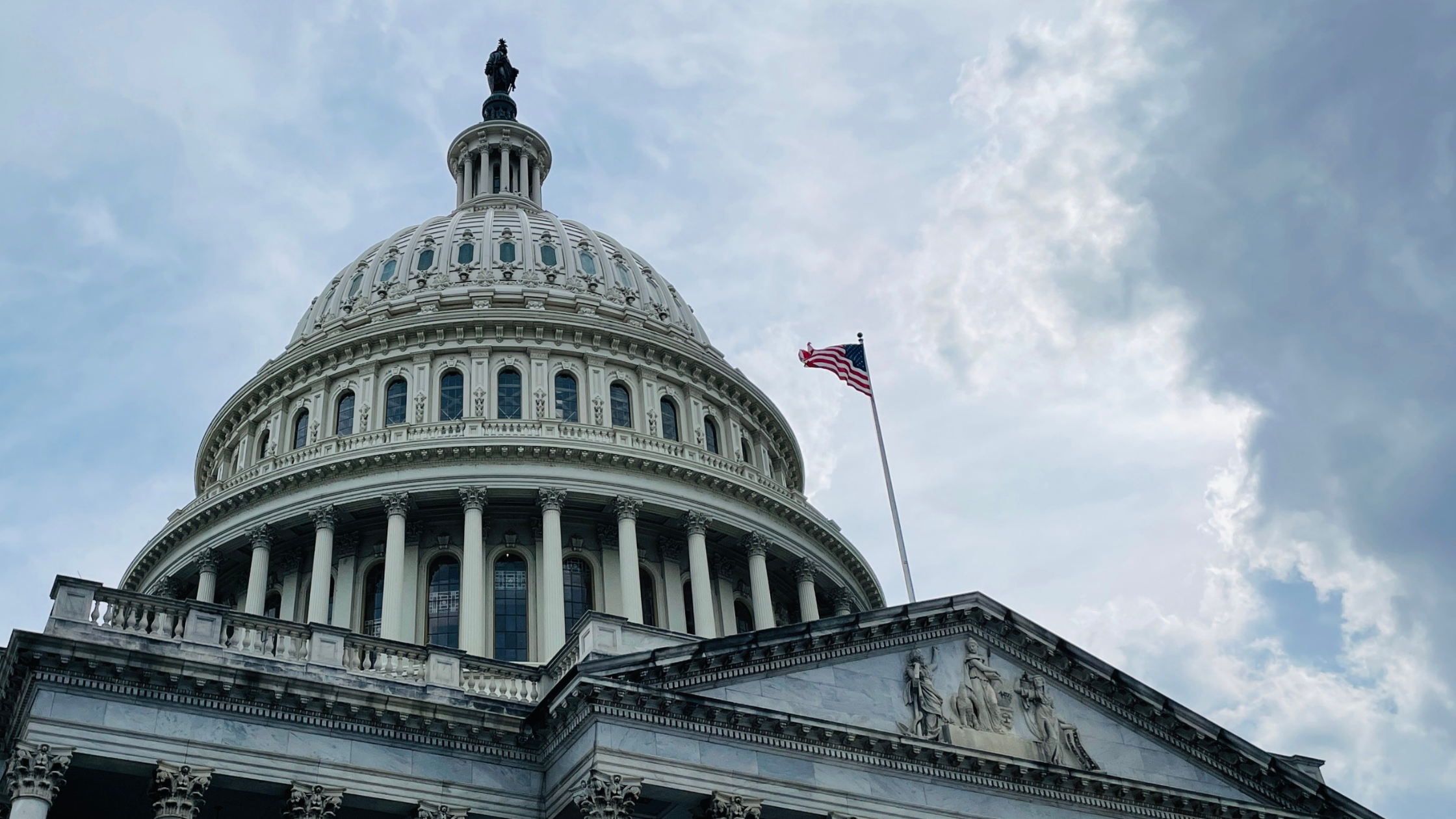
A federal building.

As federal budget cuts loom, the ripple effects will be felt at every level of the social good ecosystem. Federal funding represents a significant portion of state budgets, and reductions are likely to result in decreased revenue for local municipalities. These budgetary shortfalls will have an outsized impact on health and human service nonprofits, which are often the last line of defense for underserved communities.

The stakes are high. Many trusted community-based organizations lack the robust fundraising infrastructure needed to compete for increasingly scarce resources. This financial squeeze comes as pandemic recovery efforts remain incomplete, with critical social indicators—education, housing stability, and mental health—still struggling to return to pre-pandemic levels.

For these organizations—and the social good ecosystem as a whole—the challenge of meeting rising needs with fewer resources could be one of the defining struggles of 2025. What’s more, the ripple effects could also lead to long-term consequences for community resilience and the ability to address systemic inequities.

References:

  • Business perspectives: President Trump and the nonprofit sector. The Berkshire Edge (2024).
  • Commentary: The Stakes In Washington For Nonprofits In 2025. The NonProfit Times. (2024).
  • Opinion | Nonprofit groups are in the Trump administration’s crosshairs. MSNBC (2024).

2. Collaboration as an Imperative

A group of people around a table. They are all smiling and two are shaking hands.

Nonprofits and social service providers will face mounting pressure to work together more effectively in an era of diminished funding. Competition for resources often leads to fragmented efforts, with organizations prioritizing their own sustainability over the broader good. But siloed approaches risk creating gaps in services and duplicating efforts, which can ultimately harm the very populations they aim to serve.

But out of such challenges may come some silver linings.

At Next Stage, we’ve coined the term “the social drivers of everything” to emphasize the interconnected nature of the social safety net and its critical role in fostering economic mobility. Just as health outcomes depend on addressing social determinants like housing, education, and food security, the entire social sector benefits when organizations work collaboratively to align goals, pool resources, and innovate together.

In 2025, cross-organizational collaboration won’t just be an ideal—it will be a necessity. Expect to see service providers forming coalitions, pursuing shared funding opportunities, and leveraging partnerships to weather financial uncertainty while ensuring better outcomes for the communities they serve. Organizations that embrace transparency, open communication, and joint problem-solving will emerge stronger, demonstrating the power of sustained collaboration in addressing complex social challenges.

References:

  • Unlocking the Power of Sustained Collaboration. Sustained Collaboration Network (2024).
  • Bridging the Health Divide: The Social Drivers of Everything. Next Stage (2024).

3. An Innovation Turning Point for Philanthropy

A light bulb to symbolize innovation.

The pressure on philanthropy to fill shortfalls in social good budgets is set to intensify. But let’s be clear—philanthropy can’t single-handedly solve the problem. Government sources account for one of the largest portions of nonprofit revenue (31.8%) while foundations, corporations, and individual donors collectively contribute less than 15%. Asking philanthropy to bridge such a significant gap is like expecting a garden hose to extinguish a wildfire.

In this challenging environment, philanthropists face a pivotal choice: continue to provide stopgap funding for immediate needs or focus on driving innovation to address systemic challenges. A prolonged period of diminished resources will require a shift in how philanthropy operates. Simply maintaining the status quo won’t suffice—philanthropic efforts will need to take bold risks, prioritize systems change, and support initiatives that reimagine how social good is delivered.

Expect 2025 to usher in an era of philanthropic innovation, where funders experiment with new models such as collective impact grants, venture philanthropy, and capacity-building investments. These approaches, while not a cure-all, could catalyze the systemic transformation required to sustain the sector in the face of financial uncertainty.

References:

  • Report Predicts Uptick in Giving in 2024 and 2025. NonProfit Pro (2024).
  • Nonprofit Impact Matters: How America’s Charitable Nonprofits Strengthen Communities and Improve Lives. National Council of Nonprofits (2019).
  • Giving USA: U.S. charitable giving totaled $557.16 billion in 2023. Indiana University Indianapolis (2024).

4. Increased Focus on Social Cohesion

A nonprofit volunteer handing some food supplies to a woman in need.

In the aftermath of an election year marked by unprecedented division, the already-fragile relationship between service providers and the communities they serve is under even greater strain. This dynamic is particularly pronounced among those experiencing poverty—people who are inundated with politicized rhetoric while witnessing the dismantling of equity-focused systemic frameworks.

Rebuilding social cohesion will be a critical focus in 2025. Organizations must prioritize meaningful engagement, moving beyond transactional engagement approaches to build authentic connections grounded in trust, empathy, and mutual respect. This will require creative solutions, such as leveraging “prosocial media” initiatives (think YouTube’s Community Notes or Bluesky’s anti-toxicity tools), which are designed to foster inclusivity and constructive dialogue. These emerging features offer a hopeful counterbalance to traditional social media which often amplifies division and misinformation.

By embracing innovative communication tools and doubling down on community-centered strategies, social good organizations can begin to repair frayed societal bonds and foster a renewed sense of shared purpose. Trust will become a cornerstone of sustainable impact, influencing everything from program design to donor relations.

References:

  • Embrace the Shift to ‘Prosocial Media’. Wired (2024).
  • Community Voice: Passing Fad or Lasting Disruption? Next Stage (2024).

5. AI Makes Its Mark on Social Good

A graphic that shows the flow of new technologies working together.

How can any self-respecting prognosticator not include AI in a list of future trends? The tools we commonly refer to as “AI” are better described as advanced learning systems. These systems excel at processing vast amounts of data, identifying patterns, and automating tasks—essential capabilities for a social good sector that typically struggles with limited resources for data management, evaluation, and marketing.

AI has the potential to accelerate social impact while significantly reducing costs, a critical need in an era of diminishing resources. From predictive analytics to personalized outreach, these tools can help organizations optimize operations, improve outcomes, and do more with less. However, effective adoption of AI in the social good space is hindered by a lack of access to technology experts and infrastructure.

In 2025, we expect to see greater philanthropic investment in process improvement initiatives aimed at equipping service providers with AI-driven tools and insights. These efforts will likely extend beyond individual organizations, seeking to enhance the efficiency and effectiveness of entire ecosystems working toward common goals.

References:

  • Impactful AI: How tech leaders and social innovators are advancing AI for social good. World Economic Forum (2024).

—

Want the latest social good trends, insights, and inspiration delivered straight to your inbox? Subscribe to the Impact Insider today!

Filed Under: Corporate Impact, Nonprofit Leadership, Thought Leadership

Fundraising or Business Development: What Are We Really Doing Here?

September 9, 2024 by joshjacobson

A few weeks ago, I presented at the 2024 AFP NC Philanthropy Conference with a talk titled Why Was It Declined? Navigating the New Realities of Corporate Social Responsibility. It not only marked my return to engagement with AFP-related events but also revisited Next Stage’s Profit & Purpose series of community research.

My presentation outlined what Next Stage has learned over the years about what drives private-sector companies to allocate resources to nonprofits. I’ve presented this talk in some form or another for the better part of a decade, peeling the onion with each passing year to get at the heart of the matter.

The session appeared on the learning track Rebels, Renegades & Pioneers — apropos for thought leadership from our social innovation company. And, as usual, this talk raised some eyebrows.

The talk’s primary message is that many companies — not just publicly traded corporations — have increased their internal expectations for creating positive community impact as a result of pressure via socially responsible investing. It’s a trendline that’s only increasing (despite the headlines), and this trend is positioned to be one of the most important paradigm shifts in the philanthropy landscape over the next decade. These expectations will influence how organizations can address inequity, economic and social mobility, and a host of other societal ills for years to come.

This shift suggests a new marketplace for investment where nonprofits can build lasting relationships with companies centered on service delivery instead of byproducts, like cause marketing or employee engagement.

The primary barrier? The common nonprofit perception that “corporate philanthropy” is merely a reward for a job well done. 

Is Philanthropy Selfless or Selfish?

Self-interest has always been at the heart of philanthropy, whether we like to acknowledge it or not. And yet it’s verifiably the truth.

An essential book on the topic — Donor-Centered Fundraising by Penelope Burk, the founder of Cygnus Applied Research — uses data-supported research to back up the assertion that donors give selfishly. They give because it feels good to give, and organizations that help donors feel good about their contributions retain them and grow their giving.

“Warm glow altruism,” as Burk describes it, is a function of the donor positioning themselves as the protagonist on a journey. It’s the good they want to do that drives their story forward.

And while nonprofits tend to readily celebrate a donor’s generosity, they often make the misstep of centering those celebrations around their own story, their own programming, and their own efforts. But when organizations talk primarily about themselves, they risk alienating such donors. A donor may wonder, “How do I fit into this narrative?” And importantly, if they don’t see their starring role in the ultimate impact of their contribution, they’ll be less inclined to donate again in the future. 

Adopting a Business Development Mindset

With this focus on self-interest as a backdrop, nonprofit development professionals would be well-served to shift to seeing themselves as vendors to companies — ones that deliver a service that meets a need. The term “fundraising” emphasizes the dollar raised rather than the value produced in an exchange. Nonprofit fundraisers who view their role as building win-win partnerships that add value for both parties (donor and recipient) are far more likely to be successful.

In this way, the development department in most nonprofits could be rebranded as a form of business development. The nonprofit’s services serve as a platform for value exchange. The key is to understand better what the customer’s (in this case, the donor’s) needs are and then build an alignment.

This is not only true for the relationship between nonprofits and the private sector. It’s a concept that can be applied to financial support from foundations, individual major gifts, and the annual fund. What’s more, it’s likely how most nonprofits already view funding from the government (where grant compliance makes clear the role data plays in demonstrating value exchange).

As a former development professional who now leads business development for my own private-sector company, I can speak from experience — it’s the needs of the customer (again, the donor) that matter. Here’s how you can better position yourself for these discussions:

  • Do your research. Donor research tends to focus on identifying capacity and affinity for a mission based on support for similar causes. Understanding what might be driving specific interest in your nonprofit requires reframing the cultivation process, exploring how values, relationships, and external factors influence decision-making.
  • Talk less (Smile Listen more). Showing interest in your prospect should be about more than just small talk before launching into a pitch. Demonstrate a desire to learn. Ask for a tour of the company’s headquarters. Inquire about the philanthropy foundation’s namesake. Show a desire to build a partnership rather than engage in a purely transactional relationship.
  • Focus on the value. Nonprofits tend to over-deliver on content when presenting to institutions, burying the lede in ways that can frustrate prospective donors. A one-page summary that draws attention to the value exchange can help clarify expectations for all parties. If you think of your solicitation less as a request for support and more as a memo of understanding, you’re starting to get the picture.

Embracing a New Nonprofit-Donor Dynamic

It’s time for nonprofits to embrace a business development mindset when engaging with those who provide them financial support — especially corporate partners. Fundraising should no longer be viewed as asking for contributions as a reward. Instead, fundraising should be positioned as a way to create value-driven partnerships with mutual benefits. By understanding the self-interest of donors and aligning your services with their goals, nonprofits can establish long-term, sustainable philanthropic relationships. 

As the landscape of philanthropy continues to evolve, nonprofits who prioritize understanding their donors’ needs and focus on value exchange will be better positioned for success in the increasingly competitive marketplace for social impact.

If you disagree, I’ll probably be presenting on the topic at a philanthropy conference in the future. Stay after and chat for a while — I’d welcome your feedback.

—

Next Stage CEO Josh Jacobson launched Next Stage as a social enterprise in 2014, bridging his professional experiences as a nonprofit practitioner with his consulting expertise. He has led Next Stage’s work with 200+ clients, including nonprofits, private-sector companies, municipalities, faith institutions, philanthropies and community-based organizations. Josh’s skills in strategic positioning and tactical design help clients achieve their goals. He guides Next Stage’s work in strategic planning and collaboration management and is a major contributor to the company’s thought leadership efforts.

Filed Under: Corporate Impact, Nonprofit Leadership, Thought Leadership

Why “Wait and See” Is a Failed Strategy

August 14, 2024 by joshjacobson

“I don’t know, Josh. I think we need to take a wait-and-see approach…”

It’s perhaps my least favorite phrase in social good — the dreaded “wait and see” that often rears its ugly head toward the end of an ambitious strategic planning activity. 

The process of strategic planning is fascinating. Over the course of many months, the leadership of an organization invests time, energy and resources to move through phases of research and business plan development. Then, once the implementation plan has been finalized, the organization’s leaders are onboarded as the “owners” of following through with the well-defined, insight-informed next steps.

It’s the exciting part — when the rubber meets the road and theory prepares to transform into action. And yet… 

When the time comes to roll up the proverbial sleeves and get motivated to advance the strategy, too often leaders get cold feet. Why?

When thoughts of risk creep into the room, concerns for public perception can overtake passion for impact.

“We’re still committed to it directionally, but we just want to slow down and wait and see what happens…”

Ugh.

What “Greatness” Really Looks Like

Unwillingness to commit to solutions and action contributes to the erosion of faith in social good organizations.

Much of Next Stage’s decade-long focus on trust-building is reinforced by ongoing research conducted by Gallup. As noted in our recent community report, trust is at an all-time low, with significant declines in public confidence in America’s systems. It continues a 40+ year trendline of eroding public trust.

But this isn’t the way it always was.

Once upon a time, people banded together around common causes. Those who work in social good often pine for “the good old days” of the Greatest Generation — the people who came of age during the Great Depression and World War II. It was a generation of great empathy and is widely considered the most generous generation in modern times. Much of fundraising methodology was created with the Greatest Generation as its muse.

The Greatest Generation “walked the walk” on sacrifice. During World War II, the federal government instituted a rationing system for basic materials like food, shoes, metal, paper and rubber. All citizens, rich and poor alike, were issued ration books with stamps that could be traded for goods many of us today take for granted.

Can you imagine that level of sacrifice today? During the recent pandemic, many of our neighbors demonstrated a marked inability to work cohesively or take the actions necessary to further the common good.

Leadership is galvanized not in what we are against, but in what we are for. And when it comes to meeting the needs of people directly impacted by social and economic inequity, we too often send a message that our commitment “depends.” 

A Season for Reflection 

As we sit here today, mid-August 2024, there are many factors contributing to fence-sitting by those we depend on most for leadership.

We are in the midst of a political season in the United States unlike any other in modern times, with shifting narratives sowing disruption and confusion. I’ve seen leaders’ confident predictions about the country’s future proven inaccurate, causing all their planned next steps to grind to an unexpected halt. That’s why election seasons in particular trigger too many leaders to adopt wait-and-see practices.

But it’s not just political uncertainty that invokes pause among social good leaders. The status of the economy is evoked almost as often as the reason ambitious — and much-needed — social good strategies get stalled. But the potential for an economic recession has been a bogeyman for years, with a belief that the 8% inflation in 2022 would eventually lead to a market correction.

Another factor that causes some leaders to stay flat-footed is public perception. With concern for how supposed “wokeness” can be interpreted by others, previous commitments to diversity, equity, inclusion and belonging efforts are being quietly sidelined.

It’s against this backdrop that many institutions are considering how best to meet the needs of the people their missions call them to serve. Perhaps that includes you.

How will you lead at this critical inflection point?

Building a Culture of Leadership

I’ve never been more convinced of the importance of leadership. As someone who prides himself on strategy built from quantitative and qualitative research, I can say without any hint of irony that understanding a trendline is only as useful as the action it informs. And getting actionable is the only way to make progress. 

Fostering a culture of leadership within your organization requires embracing practices that inspire proactive engagement and accountability. 

A few methods to building and sustaining a culture of leadership that don’t succumb to the temptation of “wait and see” include the following:

  • Adopt a commitment to Community Voice. One of the most powerful ways to ensure your organization is moving in the right direction is to prioritize the voices of those most affected by your decisions. Data and financial forecasts are crucial, but they often fail to capture the lived experiences of the communities you serve. By integrating community feedback into your decision-making process, you can create effective strategies that resonate with the needs and aspirations of those you aim to support. This approach not only fosters trust but also empowers the community, including your frontline employees, to become active participants in your mission. To learn more about how to implement a feedback process in your organization, register for our free community voice webinar on August 29.
  • Embrace measured risk-taking. Leadership is often about stepping into the unknown and making bold decisions in the face of uncertainty. That doesn’t suggest moving with reckless abandon but rather calls for a calculated approach. Measured risk-taking is about understanding the balance between caution and courage, risk and reward, and moving forward with confidence when the benefits outweigh the risks. By encouraging a culture where thoughtful risks are valued, you empower your team to innovate and drive your mission forward, even in the face of uncertain times.
  • Create accountability for inaction. Inaction can be as consequential as action, yet it often goes unexamined. Establishing a system of accountability that revisits decisions not to act is crucial for future improvement. By regularly assessing the outcomes of inaction, whether they’re missed opportunities or successfully avoided pitfalls, your organization can learn and adapt. This practice not only prevents complacency but also ensures that every decision, including the choice to wait, is made with full awareness of its potential consequences. Leaders who hold themselves and their teams accountable for inaction demonstrate a commitment to progress and a refusal to let fear dictate their strategy.

In leading your organization or department forward, it’s important to remember that leadership is not just about making decisions — it’s about making the right decisions at the right time with the right people in mind. By adopting these principles, your organization can move beyond the paralyzing effects of “wait and see” toward a future of intentional, impactful action.

My colleague Helen Hope Kimbrough reminded me recently of a seminal quote from one of America’s great leaders, Martin Luther King Jr.:

“Take the first step in faith. You don’t have to see the whole staircase, just take the first step.”

—

Is your organization at an inflection point? Need help figuring out your next steps? Reach out today to set up a consultation, and check out our website for more information. 

—

Next Stage CEO Josh Jacobson launched Next Stage as a social enterprise in 2014, bridging his professional experiences as a nonprofit practitioner with his consulting expertise. He has led Next Stage’s work with 200+ clients, including nonprofits, private-sector companies, municipalities, faith institutions, philanthropies and community-based organizations. Josh’s skills in strategic positioning and tactical design help clients achieve their goals. He guides Next Stage’s work in strategic planning and collaboration management and is a major contributor to the company’s thought leadership efforts.

Filed Under: Corporate Impact, Nonprofit Leadership, Thought Leadership

The Data Won’t Save Us: Human Insights for Social Change

February 22, 2024 by nextstage

The Data Won’t Save Us

I’m a self-professed data nerd. But there are long-held data points that have been repeated so many times that they have become conventional wisdom – or even tropes.

We plan for future prison capacity based on third grade reading rates. Source
Only 3% of youth exiting the foster care system will graduate college. One in five will experience homelessness. Source
One-third of children who grow up poor in the U.S. will experience poverty as an adult. Source
If your city has low economic mobility, it is nearly impossible to escape poverty.

If you’re plugged into any conversation about social innovation, you’ve heard these numbers, and many others like them. They are breathtakingly, shockingly awful – a stark report on the reality that many nonprofits, activists and community leaders live every day.

I think most of us like data – even if it is hard to look at – because we can make sense of it. Numbers can be studied and improved. We perceive that the ‘answers’ can be found in those numbers. And while data is driven by a desire to know more and do better, I wonder if it sometimes stunts our collective curiosity.

When I pause to consider what’s behind the data, I start to wonder: 

  • At what point does data become a self-fulfilling prophecy? How do we use these numbers to guide us rather than allowing ourselves to fall into resigned acceptance? 
  • In using data to make sense of complex issues – do we also use it to distance ourselves from the complexities of being in relationship with people?
  • How can data inspire us to imagine something new – instead of simply to predict an inevitable future?

Quantitative data is critical to the work of social good. We need it to shed light on issues, to help evaluate the effectiveness of programs and to galvanize us to action. But the temptation exists to bury ourselves in that data, to seek the answers in clean numbers and next steps.

The data won’t save us – but it can point us in the right direction.

Let it guide us towards relationships.

Data is a great starting point, but it’s no substitute for lived experience. This is one reason that Next Stage so strongly advocates for qualitative data. The data often tells us where to look – but how and why are most often rooted in conversations with people most proximate to the issue at hand. These relationships are where trust is built. And trust is where long-lasting social innovation starts.

In our report, Inside Out: The Case for Community Voice, we shared a story about a nonprofit’s mobile health unit. The unit nestled in a few locations before centering itself at a local community center. They saw very little traffic, even though the numbers suggested that this would be best supported by a mobile unit. But when the driver of the mobile unit walked into the local 7-11 and struck up a conversation with the owner, they found that the convenience store was a trusted ‘third space’ for that community and saw a lot of daily traffic. The manager offered the parking lot for the mobile unit once a week, the team accepted and use of that unit increased significantly – all because of a partnership rooted in a simple conversation.

Let’s embrace the tension.

Working on any social issue is messy and rife with competing viewpoints. It can be tempting to lean on data that feels straightforward and ‘clean,’ when conversation feels messy. The reality is that every data point represents a real, complex human with a specific viewpoint. 

Our team learned this firsthand when we did work for TreesCharlotte. Charged with developing campaign messaging, we pulled from data and our own common beliefs to develop a message we thought was obvious – ‘Everyone loves trees.” When we workshopped this with our focus groups and stakeholders, the dissent was immediate and overwhelmingly more complex. It turns out that not everyone loves trees. They sometimes fall on houses, are expensive to maintain and have impacts that are out of our control. We changed the message to a more nuanced expression, “Everyone has a tree story,” but if we hadn’t been willing to engage the tension – and the disagreement – our data would have led us far astray.

Let it inspire us to imagine something different.

Rather than self-fulfilling prophecy, let’s allow those sobering numbers to help us get curious. The temptation to bury ourselves in the research is real, but so is the risk. It’s easy to forget that the data isn’t inevitable, and that we have the ability to imagine something different for ourselves.

Our team recently collaborated on a documentary about Southside Homes that featured highly proximate organizations, including ParentChild+.  In the documentary, NC State Director Angela Drakeford speaks to the need for imagination and action when she states, “We have all the data we need. We don’t need to waste ten, twenty, thirty more years on data – then the ten, twenty, thirty years of people that contributed to that data, it’s too late to save them. I think we have enough now to think outside of the box. Let’s kick those boxes over and let’s make a difference in this community.”

Filed Under: Corporate Impact, Nonprofit Leadership, Planning & Implementation, Thought Leadership, Values & Culture

2024 Social Good Forecast for Businesses

December 14, 2023 by nextstage

With the year winding down, the Next Stage team is looking at the road ahead. What will change about social impact efforts in 2024? What will CSR leaders prioritize? How will nonprofits evolve to meet new challenges and change? In this ‘2024 Social Good Forecast for Business, we’re breaking from our usual ‘trend’ language – because we don’t believe that anything on this list is temporary – and instead we are forecasting.

Overall, sustainability and environmental concerns will be top of mind for companies everywhere. Just as important is the ‘Social’ part of corporate social responsibility efforts – and the we expect to see the the predictions below remain well into the future: 

Authenticity is the Word of the Year

Merriam-Webster recently declared ‘authentic’ to be the word of year. While this is a reaction to a wide set of cultural phenomena, it aligns with what younger generation consumers and employees have been asking of companies for years. Savvy company and CSR leaders will focus on aligned impact efforts rooted in community and employee voice. Companies who can create environments where social good feels authentic will reap the benefits of employee retention, recruitment and strong culture. In the same vein – expect greater sensitivity to impact-based marketing campaigns. Watch for the trap of ‘greenwashing’ or ‘rainbow capitalism’ campaigns without meaningful action behind them. 

Trust-Based Philanthropy Will Pick Up Steam

The concept of trust-based philanthropy is already picking up steam among philanthropy and nonprofits. This year, we expect it to become a hotter topic among companies – and for good reason. Trust-based philanthropy is all about creating more equity in grant-making processes. This most often shows up as multi-year, unrestricted funding, streamlined application processes and more transparent, bi-directional feedback. Our team is dipping our toes in these waters through our UnFundable Grant – stay tuned for more of what we’re learning!

Mental Health Will Matter More Than Ever

If we learned anything during the pandemic, it was that mental health is critical for a healthy organization and maximum impact. We expect organizations everywhere to prioritize mental health, both inside and outside their companies walls. This will show up as companies developing strong internal campaigns to support their people, as well as greater funding to ensure that communities stay mentally strong and healthy. 

Funders Will Prioritize Collaboration 

The biggest challenges facing our communities are layered and multi-faceted, with positive outcomes in any one focus area dependent on supports in other, seemingly unrelated areas. How can a child achieve academically when affordable housing for that child’s family is out of reach? How do we build workforce pipelines that realize economic mobility when transportation options are limited? We have arrived at a clearing in the woods, where leaders in overlapping sectors are realizing there is no successful path forward without collaboration. This drive for collaboration will be fueled in part by the private sector – and we see great potential companies who are willing to help tackle these challenges head-on.

Businesses Will Look to Fund More Community-Based Organizations

Companies are increasingly looking to fund community-based organizations (CBOs) as a way to fuel local impact. It’s a way to support hyper-local impact through organizations most proximate and trusted by communities – but the challenges for companies can be equally steep. For companies used to funding highly structured, large nonprofits with strong processes, working with CBOs can require more patience and support. Watch for more companies dipping their toes into hyper-local waters – and more conversation on how to do this effectively. 

Employees Will Go To Bat for DEI

After the death of George Floyd, DEI evolved and structural changes were prioritized at many companies – but many of those same positions have been cut over the past twelve months. And while it is certainly an uphill battle, this article recognizes the increase in employee activism for DEI initiatives. Some DEI professionals are finding that, “Internal activism is on the rise, with four in 10 of all employees and half of millennials reporting that they had spoken out about controversial issues at work.” Expect to see this trend continue with younger generation employees ‘leading from their seats.’ 

We’d love to know – what would you add to this list?

Filed Under: Communications, Corporate Impact

  • Page 1
  • Page 2
  • Page 3
  • Page 4
  • Go to Next Page »

Primary Sidebar

Footer

Subscribe to the Impact Insider

Your monthly roundup of social good news and trends

only_email

Who we are

What we do

Who we serve

resources

Newsletter

Careers

Let’s work together!

Contact Us

fb
in
ins

© 2026 Next Stage Consulting | All rights reserved | Privacy Policy