• Skip to primary navigation
  • Skip to main content
  • Skip to primary sidebar
  • Skip to footer
Next Stage – Social Impact Services

Next Stage - Social Impact Services

Social good strategy to amplify your impact

  • Who we are
  • What we do
  • Who we serve
  • Resources
    • Impact Stories
    • News & Insights
  • Contact
  • Newsletter
  • fb
  • in
  • ins

Values & Culture

What Movement Are You Leading?

April 26, 2022 by joshjacobson

I’m back with another installment in our series unpacking how the shift from Corporate Social Responsibility (CSR) to Environment Social & Governance (ESG) is transforming… well, everything. I’d encourage you to read our earlier primers on the differences between CSR and ESG and the role risk is playing in the ESG pivot as a preface to this article.

As Janet covered last week, we have spent the last year continuing our study of how social impact is evolving inside corporate America. We think it’s a pretty big deal, both for the nonprofit organizations we originally built our business to serve and to society as a whole. We’ve reframed our company’s entire theory of change as a result of this research and have constructed a business plan into the future to scale our new approach.

What we’ve learned is that the work we have done with nearly 200 nonprofits since 2014 is ultimately not that much different than the paradigm shift we are navigating with private sector companies. Both are being powered by people, and helping lead movements of people is what Next Stage is all about.

The Shift from Sustainability to ESG

While it may seem like ESG came out of nowhere as a disruption to private sector businesses, it has been a movement two decades in the making. ‘Corporate charity’ existed for the better part of the 20th century, but the new millennium brought with it a greater degree of focus on environmental sustainability. Companies began to pay attention to their carbon footprint, particularly those businesses with complicated supply chains that required significant logistics. The debate over climate change may have raged politically, but many companies were quietly beginning process modification and change management. 

These efforts grew into what we now call ‘sustainability,’ and for many companies it became a significant part of their corporate cultures. The first Chief Sustainability Officers were seen in the early 2010s as companies sought to be proactive. As we covered in our last deep dive on this topic, the risk of regulation was a motivating factor for companies that began to see a societal shift on the horizon.

Running concurrent with sustainability inside the corporate construct have been other expressions of social consciousness. As previously noted, corporate social responsibility predated sustainability but rarely was directly connected to the strategic arm of the business. For most companies, this expression has lived disconnected from the rest of the business, not reporting into any of the departments it logically impacts like human resources or marketing.  

Related efforts arose in other areas of the business model. Initiatives to create increased diversity in the workforce began as expressions of human resources, eventually evolving into more mature goal setting around inclusion and equity that led to the creation of DEI as a strategic imperative. Some companies have recently added Chief Diversity Officers as DEI has taken on new energy in the wake of increased calls for racial justice following the murder of George Floyd in 2020. Identity has been a big part of the emergence of employee resource groups (ERGs) that have become expressions of workplace culture.

The challenge for companies right now is that they are applying what previously worked for sustainability in a new era of change that ESG is signaling. A combination of corporate counsel and sustainability leaders are being tasked with a new form of risk with regulatory implications. Except this time, the field of play is focused on new human-centered metrics that are more difficult to manage. If sustainability was primarily centered on operational change management, this new focus on ESG is more expansively reaching into all aspects of the business model. And at stake, more than ever before, is public perception driven by customers, employees and shareholders.

Leading the People Powering a Movement

We know that sounds sort of ominous. We have been wrestling with how to frame the opportunity that is in front of institutions of all types and finding that a little bit of scary-sounding rhetoric is needed to get the attention of decision-makers. Like the nonprofits we’ve worked with for so long, sometimes you have to talk about the downside risk of inaction.

But Next Stage is far more optimistic about what this change means for all of us, for a society that is increasingly becoming more plugged in to how we all have a voice through collective action. What has been termed as ‘generational change,’ of a Millennial and Gen-Z-led effort to bring values front and center, can no longer be compartmentalized. These young people are not aging into acceptance of previous norms. Instead, they are reshaping the world through a renewed focus on ethics and guiding principles. 

For a guy who has dedicated his career to advancing social good, it is hard to see this as anything but a win.

We believe this need not be seen as a disruptive force for the private sector. America is founded not only on democratic ideals but capitalistic ones as well. We believe in a free market, and that market is increasingly declaring itself. How will your company (or nonprofit) respond?

We liken this paradigm shift to others that have come before it, to the industrial revolution, the rise of digital technology, the advent of the Internet and the emergence of social media. Each of these advancements challenged leading institutions to make a choice – to either fiercely protect the status quo that had worked so many years, or to make changes to stay contemporary to a new reality. For every Sears that refused to make those changes fast enough there is an Amazon, a new company that seeks to harness the paradigm shift into a powerful expression. 

This movement has the potential to help solve problems that have long plagued our communities, if we can harness the power of collective will and ownership. 

The New Realities of Collective Ownership

We use the word ‘collective’ intentionally. Social media, the most recent paradigm shift, has changed society in ways both good and bad. One way it has been used effectively is in galvanizing people to action in service to shared values. 

In this way, we believe all of the brands we engage with are collectively owned – we either feel they express us or they don’t – and increasingly that determination is being made not only through regulatory processes but in the court of public opinion. 

It is a space Next Stage knows very well. We have long championed the 501c3 nonprofit as a collectively owned construct, powerful in the ways it leverages mission, vision, values and guiding principles to build buy-in toward tackling society’s toughest challenges. It takes care to knit together the many constituencies that make up the nonprofit business model including board members, staff, volunteer, donors, and perhaps most importantly, the people served by the nonprofit. Ensuring all feel ownership in the model creates the sense of belonging that fuels the nonprofit. Without a shared belief in the nonprofit – in its virtuousness, deep commitment and strategic savviness – it would be entirely ineffective no matter how many resources it has. The nonprofit model is collectively owned.

The new reality for the private sector is that we believe their business model is also collectively owned – not because the IRS designates it as such, but because customers, employees and shareholders have decided that it is.

A New Private Sector Paradigm

Next Stage has arrived at a moment of clarity about what we are here to do. Our new brand manifesto is in the final stages of development and I could not be more excited. It speaks to our work in helping our clients lead movements, of “building a less lonely path for the visionaries and changemakers” who aspire to reshape the world.

There is a critical need for business leaders in that matrix. Social impact will always be a small expression if we think of it as belonging solely to nonprofit organizations. We believe fiercely that nonprofits can be effective and powerful partners to the private sector in unlocking their pent-up potential, but the much bigger movement we want to be a part of is dependent upon the business sector.

We see so much potential in our private sector clients, to not only ride this wave of social change but leverage it, letting it fuel a transformation that translates into bottom-line results. Without profitability, this movement will not be successful. As with every paradigm shift that came before it, capitalism must find a way to create a new status quo that is infused with new standard operating procedures.

We want to do our part. We look forward to sharing more about the future we see in the weeks and months ahead, including how your company or nonprofit can harness this paradigm shift to advance your goals. Because a movement is meaningless without an effective call to action.

We will be sharing more about this at SHARE Charlotte‘s Fifth Annual Nonprofit Summit next Tuesday, focusing specifically on how nonprofits of all sizes can center their corporate partners’ customers, employees and shareholders in their private sector activation plans.

Intrigued and want to explore how to harness this paradigm shift for your company or nonprofit? Reach out and schedule time with our team. We believe every conversation is another step toward the future we want to see.

Please consider sharing this article on social media via LinkedIn, Instagram, Twitter and Facebook

Filed Under: Corporate Impact, Thought Leadership, Uncategorized, Values & Culture

Here’s Why You’d Better Have an Employee Engagement Strategy

June 14, 2021 by joshjacobson

“Employee engagement” is a big deal for businesses of all shapes and sizes. But what does employee engagement strategy even mean and how is social good playing a role?

As outlined in our recently-published Social Good Report: Profit & Purpose, one of the bigger challenges in Charlotte right now is talent recruitment and talent retention. Businesses in this region are growing and new companies coming to town are all looking for top-quality talent to serve as the engines of their enterprise.

In the years leading up to the pandemic, the challenge of sourcing (and keeping!) one’s talent was a not-so-quiet crisis for many companies that either struggled to source qualified candidates or experienced a churn as their people moved on to greener pastures.

The tight labor market we were experiencing in 2019 was actually the inspiration for Next Stage to (finally) jump in to its work on Profit & Purpose and the upcoming public launch of its Social Impact for Business service line. We believe that there is an underutilized, under-leveraged component of local business models that could play a huge role in creating the sort of workplace culture that attracts the best talent (both locally and from across the country) – and perhaps most importantly – helps companies keep the people they spend money and time training.

Any guesses? If you know us at all, then you know our answer – partnership with nonprofit organizations.

But not just nonprofits. We believe in Charlotte workplaces adopting a “community mentality,” where what is happening outside the walls of the company is brought inside your offices to activate an intentional culture during the 8am-5pm hours. At the same time, we think employees desire to live your company’s values out in community, and managers need to find ways to embrace this opportunity beyond the same old day-of-service volunteer projects.

Here’s the catch – everyone is making this up as they go.

A look across the Charlotte landscape turned up a myriad of ways companies were trying to do this in the years leading up to March 2020. We saw unlimited paid time off, kegerators installed in break rooms, office redesigns to enhance collaboration, and even an underground bowling alley (shout out to Red Ventures with what sound like the most employee engagement-focused campus in the Charlotte metro).

If these sound like strategies to engage Millennial and Gen-Z employees, you’d be exactly right. But as we found in our own survey of more than 350 next generation employees, these generations want more than ‘gee whiz’ features where they work – they want to live their values. The top three factors we found influencing satisfaction with one’s current workplace were work-life balance, a positive workplace culture and strong values that show up in how the company conducts business.

Here’s another catch – companies aren’t particularly good at building authentic expressions of community inside and outside their walls. It often rings hollow.

You know who is? You guessed it – nonprofit organizations.

The time has come for companies to stop seeing nonprofits as “charities with their hands out” and instead embrace them as vendors of employee engagement that they are uniquely capable of fulfilling. This is no longer the secondary benefit for a company of their acts of philanthropy – it is the raison d’etre.

This is altogether more important as we return from a pandemic period that saw the fight for racial and social justice become a daily reminder of societal challenges. Companies must now contend with how to adopt policies and statements, strategies and tactics, all while navigating new business challenges.

It’s a lot. We have incredible empathy for Charlotte business leaders.

Next Stage knows you have questions and we’re here to help. Through our Social Impact for Business service line, we are working with companies to design compelling social good strategies that lead to impact in employee recruitment, retention and satisfaction. Got a specific challenge you’re wrestling with? Or a compelling workplace asset you want more people to know about? “Yes, we have a nonprofit for that.”

Reach out to us to learn more: info@nextstage-consulting.com

Filed Under: Values & Culture

Standing in Solidarity #JusticeforGeorgeFloyd

June 19, 2020 by nextstage

Next Stage stands in solidarity against systemic racism and oppression in our country and our community. Our firm is about the advancement of social good, but we know this can’t fully happen until we recognize systems of injustice in our communities, in our sector, and in our minds, and work to dismantle them.

We have work to do. Our firm has committed to walking the long road to racial justice. We will listen to Black voices and follow the lead of organizations who are already engaged in this work. We will examine the ways our firm can develop and implement anti-racist policies in our own work.

When injustice is systemic, it’s up to all of us to roll up our sleeves and get to work. We are starting with ourselves.

Filed Under: Values & Culture

Gratitude, Kinship & Kathleen Ross Crosby

February 26, 2020 by nextstage

A few weeks ago, Caylin and I had the opportunity to serve as facilitators for a Kinship Summit organized by SHARE Charlotte on behalf of the Reemprise Fund. Charlie Elberson, his wife Lou Kinard and more than 50 leaders in community development got together to discuss the concept of kinship. Suggested by Father Gregory Boyle, founder of HomeBoy Industries, kinship is the state of being intimately connected to other people — of loving them and being unconditionally loyal to them.

In a town that bandies around the term “social capital” with reckless abandon, Charlie and Lou are interested in better understanding how kinship plays a role in building the bridges and bonds that make resource linking across difference possible. It was an incredible morning and words don’t really do it justice so I won’t try.

The setting for the summit was the Grier Heights Community Center, the former historic Billingsville school that reopened as a community center in 2015. It was a place I had been before but never with my eyes opened quite so widely.

The walls outside the main meeting rooms (which were once classrooms) are lined with photos of individuals from the Grier Heights community who had made a meaningful impact on the people there. My eye was drawn to Kathleen Ross Crosby, with the following inscription:

“In 1971 when desegregation created tensions at Billingsville, an elementary school on the edge of all-black Grier town and all white Cotswold, she was made its principal. Advocating child-centered programs and generous doses of praise, she gradually created a relaxed integrated school,” declared Jack Claiborne, Associate Editor of the Charlotte Observer in an article written about Mrs. Crosby’s accomplishments featured in the newspaper on Saturday, July 2, 1977.

Mr. Claiborne, further stated, “Her work was not unnoticed. The B’nai B’rth women gave her a human relations award. The NAACP elected her to its Hall of Fame. WBTV made her its ‘Woman of the Year’ and Johnson C. Smith University named her ‘Alumnus of the Year’.”

Mrs. Crosby’s outstanding leadership abilities are indicative of the high-quality educators who have worked in the Grier Heights Community.

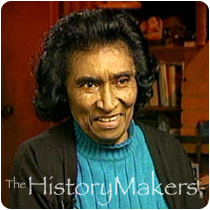
I found this amazing video of Mrs. Crosby on the The History Makers website, the nation’s largest African American video oral history collection. The video starts mid-story as she is talking about a special meeting of the Board of Education for Charlotte-Mecklenburg Schools, convened apparently because she had sought to transfer a popular teacher who was under-performing. As she tells the story about how she had earned the respect of the school board (all white men), and that they backed her decision in the face of an angry mob of “rich parents,” I can’t help but think about how kinship-forming played a role that day and throughout Mrs. Crosby’s career. Give it a watch if you have a few minutes to spare – it is also clear she was a hoot in her day!

February is Black History Month. Our trip to the Grier Heights Community Center reminds me that while we all might feel a tremendous sense of urgency to make Charlotte the best it can be, we are standing on the shoulders of giants like Mrs. Crosby. Feeling tremendous gratitude for her great work. Though she passed away in 2012, her spirit lives on.

Filed Under: Values & Culture

Reflections on REI’s Two-Day Racial Equity Workshop

December 5, 2019 by nextstage

“One’s mind, once stretched by a new idea, never regains its original dimensions.” – Oliver Wendell Holmes Sr.

In November, the Next Stage team participated in the Racial Equity Institute’s two-day Phase 1 training designed to “develop the capacity of participants to better understand racism in its institutional and structural forms.” The workshop was hosted in Charlotte by Race Matters for Juvenile Justice, a collaborative leadership group working to reduce disproportionality and disparate outcomes for children and families of color.

The following are reflections from our team members:

Caylin Haldeman, Director, CULTIVATE

For two full workdays, I put my email vacation responder up and sat alongside my colleagues at Next Stage and Charlotteans from all corners of our community — representing local universities, hospitals, the City, philanthropic institutions and more — in an uncomfortable chair in a chilly room at Hope Haven’s North Tryon campus. We were gathered for the Racial Equity Workshop, hosted by local collaborative Race Matters for Juvenile Justice and facilitated by the Racial Equity Institute, located out of Greensboro, NC.

It feels cheap to say that this was a powerful experience. Growing up in a Quaker learning environment, social justice and equity were concepts that showed up consistently through my studies and in discussion both at home and in the classroom. I fell into the nonprofit sector through volunteer work that was part of a class I took my junior year of high school exploring race and poverty in Philadelphia, PA. But it didn’t take long to realize how much more I have to learn — and frankly, how much I have to unlearn as well.

The work of creating racially equitable organizations and systems starts with having a full understanding of our country’s cultural and historic roots and a common vocabulary with established definitions for key concepts — for example: race, prejudice, racism, white supremacy, systems, social and institutional power. But it can’t end there.

We need to recognize the social and institutional power present in the inherent dynamic of the nonprofit and philanthropic sectors, and our role in that inequitable system. I look forward to continuing to dialogue with the Next Stage team about how we can incorporate an equity lens into the work with do with nonprofits every day — and how we can participate locally to dismantle racism’s hold on our community.

Taylor Gardner, Client Coordinator

Why should we end racism?

It’s not a question you hear often. Instead, you hear questions like, “is racism still going on in 2019” or “how can we stop racism?” I thought it was interesting that the folks over at REI started with a simple, yet important question, why?

In November, I had the pleasure of joining the Next Stage team for a two-day workshop hosted by the Racial Equity Institute. In the past, I have been a part of workshops like these, so I sort of knew what to expect. However, even though I thought I knew what racism was and how the majority of the systems in this country are set up, this workshop opened my eyes to so much more. They did an awesome job of using history to shape the conversation.

As a black woman, I am often asked to forget the past, because it didn’t happen to me or my parents. However, this workshop proved that in order to make changes in the future, we have to address the past first. It also proved that things are easier to understand when you are all speaking the same language. It is easy to take into account your personal experience when thinking about racism and using that to inform your actions or attitude towards it. But, if you start with history and are in a room with people who all have the same information as you do, it is easier to come up with solutions and remain hopeful that one day things will change.

We all know or at least have an idea about racism in this country. But, something I personally never thought about was how it came to be in the first place or how it impacts all other aspects of life. I’ve heard and seen racism in the workplace or education, but what about in the financial industry, social services, or within nonprofits? Unfortunately, the truth is it is present in all systems and isn’t just Black and White. It is an issue that started with greed and has generational effects.

While racism is a big problem to face, I appreciate organizations like REI who are spreading unbiased information to help solve the issue. I am eager to see how we at Next Stage will use this information to impact our community and work.

Janet Ervin, Consultant

“Those who cannot remember the past are condemned to repeat it.” This is the quote that kept coming to mind as I sat through the workshop. I’ve always loved history and would have considered myself well-versed in both US and NC history… until I realized how much I don’t know because I had never encountered it before. Viewing the development of our country and public policy through a racial lens was sobering, humbling and eye-opening.

I have worked recently with an organization that help entrepreneurs in under-resourced communities and we’ve talked a lot about the impact of generational wealth, segregation in neighborhoods and more. And while I’ve understood these concepts on an intellectual level, the history and economics lesson in the workshop gave me the context to really ‘get’ how and why we got here – and the importance of dismantling the systems that make opportunity less accessible for people of color.

So much of the history in this workshop isn’t taught in school and it helped drive home the ways that we perpetuate policy and systems that have real-life consequences for people. Understanding the systems would help us better name the inequities and acknowledge the ways we benefit – so we won’t be condemned to the mistakes of our past.

On a personal level, I plan to take action by tackling a long reading list (starting with A People’s History of the United States) so I can better understand the policies that got us here and to consider the ways I can create more equity in my own work and life.

Tanya Varanelli, Project Manager

It’s going to take some time to fully unpack everything I learned and unlearned at this workshop. Starting with the “facts” from historical events and understanding how Americans have internalized the narrative we have been told. To me, this workshop was about learning the truth, being open to a new narrative, and having the hope and desire for change.

Knowing that race is a major predictor of outcomes should change how we systematically serve our community and use our voice. This workshop was a catalyst for understanding the true impact that race has our systems and what I can do as an activist for change. I am grateful to be able to participate in this powerful workshop with my coworkers and others in our community dedicated to increasing opportunity for all.

Josh Jacobson, Managing Director

Have you ever had to describe something profound to someone and feel you don’t have a suitable vocabulary? That’s how I feel right now. I was substantially impacted by REI’s Phase 1 training, and not a day goes by since that I haven’t reflected on what we learned.

Much of the workshop is a history lesson, beginning with colonists reaching Virginia and founding the Jamestown Colony in 1607. The workshop facilitators nimbly took us through the highlights (but really lowlights) of policymaking that has reinforced current systemic racial inequities. It was a stunning narrative I had never heard and will be forever changed by hearing.

At our recent staff retreat following this workshop we affirmed our passionate desire to bring a racial equity lens to our firm’s work, both internally and externally. I am personally pursuing a pledge I made that day to be an antiracist. I oppose racism, and to do that effectively, we change systems, organizational structures, policies, practices and attitudes. I am at the beginning of this journey but I am filled with purpose.


To learn more about Race Matters for Juvenile Justice, the Racial Equity Institute, or how your team can participate in an upcoming workshop, check out their website for more information.

Filed Under: Values & Culture

The Values Retreat: A Love Letter

October 23, 2019 by joshjacobson

This past Monday, I had the opportunity to engage in one of my favorite activities: facilitating a values retreat. Of all the ways in which Next Stage engages in facilitation, none is more spirit-lifting than bringing together the board, staff and key stakeholders of a nonprofit to talk about their “why” and the organization’s “how.”

I thought I’d take a minute to unpack why I think it’s so important, and why it gets me so charged up.

Values & Guiding Principles

Our retreat focuses on prioritizing a set of values and defining a set of guiding principles for a nonprofit organization.

Values are the foundational beliefs that anchor a nonprofit’s work. Beyond mission, vision and programs, values are the nonnegotiable characteristics that best describe who we are and why we exist. These words describe the things that matter most to our organization, and should be reflected in our work every day.

Guiding principles are “applied values” meant to govern action and define a brand of those actions for people who interact with the organization.  Values without the corresponding guiding principles they inform are less meaningful, like setting a goal but not making it measurable.  They become just positive-feeling words without the teeth to make them real.

If your organization already has a set of values, this exercise can seek to validate them. Sometimes values were chosen by a founder or by a group of people at another point in time, and it can be meaningful to test whether they remain core to the organization.

There are many values an organization can choose from (e.g. excellence, integrity, professionalism) but translating them into guiding principles is what makes them real for everyone involved with a nonprofit. It also requires more than just the board of directors. This retreat is ideal with 20+ participants to include members of governance, staff, core volunteers and other very engaged stakeholders.

Dotmocratizing Values

Our retreat begins with a fun, participatory exercise. Next Stage works with a nonprofit’s leadership to settle on a list of 30-40 values relevant to the organization. These values are printed on 8.5 x 11 paper in a large font, one per sheet, and hung side-by-side on a wall. Retreat participants are given five circle stickers to prioritize the values that they feel are most important to the organization. They are also given one special sticker to put on the value they feel is most important. After being given this direction, participants are let loose to get out of their seat and “vote by dot.” It is called dotmocracy, and we love it.

It is really interesting to see how people treat this exercise. Some particpants go right up to the wall and quickly assign their dots. Others hang back and watch it all unfold before deciding how to vote, sometimes breaking ties or teeing up a value that has gotten less attention. We often use different colored dots for different sets of stakeholders (e.g. board vs. staff) so we can see trends in how groups might think differently. It usually takes about ten minutes for a team of 20+ to engage in the exercise.

Once complete, we help the participants narrow the values to a set of roughly seven. There are typically 3-4 values that are clear winners in the room, with a second tier where there may be a farily even set of dots. It might be possible to combine some values, helping the process along.

Establishing Guiding Principles

The real magic is evolving the value concept into a guiding principle, which are typically short, pithy statements that encapsulate how a value is applied in practice. Guiding principles serve to help those engaging with the organization to understand its policies, procedures and decision-making framework.  Guiding principles inform the notion of organizational growth and provide a framework for on-boarding new constituents.

As an example, an organization with a value of “professionalism” is likely to have a guiding principle that speaks to “championing professionalism in all aspects of the organization’s programming, operations, communications and community engagement.” That guiding principle serves as a backbone for a set of guidelines in each area of focus (e.g. “financial reports are generated monthly to monitor progress), all in service to the guiding principle regarding professionalism. We often work with organizations to translate guiding principles into processes, policies and procedures that make them tangible.

Guiding Principles & Intentional Culture Development

At Next Stage, we believe in a simple equation: Values + Processes = Internal Culture & External Brand. Values are at the core of a nonprofit’s identity, and reinforcing processes need to be put in place that foster intentional outcomes.

And that extends beyond programming to the entirety of the organization. Nonprofits are typically better at ensuring values-aligned programming than they are in building an intentional organizational culture that reflects similar values. So while a nonprofit might champion personal development to a program participant, that nonprofit might not be providing its staff with the same opportunities for personal growth.

This retreat is typically galvanizing and the starting point for strategic planning and visioning. Want to discuss how a values retreat might unlock your own nonprofit? Give me a shout.

Filed Under: Values & Culture

  • « Go to Previous Page
  • Page 1
  • Page 2
  • Page 3
  • Page 4
  • Go to Next Page »

Primary Sidebar

Footer

Subscribe to the Impact Insider

Your monthly roundup of social good news and trends

only_email

Who we are

What we do

Who we serve

resources

Newsletter

Careers

Let’s work together!

Contact Us

fb
in
ins

© 2026 Next Stage Consulting | All rights reserved | Privacy Policy