• Skip to primary navigation
  • Skip to main content
  • Skip to primary sidebar
  • Skip to footer
Next Stage – Social Impact Services

Next Stage - Social Impact Services

Social good strategy to amplify your impact

  • Who we are
  • What we do
  • Who we serve
  • Resources
    • Impact Stories
    • News & Insights
  • Contact
  • Newsletter
  • fb
  • in
  • ins

Emerging Organizations

Worried for Workforce: Addressing a Nonprofit Talent Shortfall

June 20, 2023 by joshjacobson

It is nearing the end of June, and you know what that means — the end of the fiscal year for many nonprofits. Leaders at organizations across the region are in the final weeks of securing funding to balance their budgets, completing programming ahead of the summer months, and making plans for the new year that starts when the calendar flips to July.

It is also the time of year when the game of musical chairs commences as staff departures are announced. Chief executives and nonprofit leaders in charge of programming, operations and development often wait until the end of the fiscal year to make their moves, hoping to minimize the negative impact of leaving in the middle of the year or in the final push at the end of the year. And that means a domino effect that typically ripples into the early fall.

This annual reshuffling of talent in the nonprofit sector has been increasingly challenging in recent years. Finding great talent for your nonprofit has never been easy, which we’ll get to below, but of late something else is going on. It started even ahead of the onset of COVID-19 but got much worse as the pandemic raged on.

There is a talent shortfall in Charlotte’s nonprofit sector. And it is an active threat that is only growing worse.

We at Next Stage believe it has gotten to a point that it requires calling it out and building a community strategy to address it.

What is Going on Here?

In 2021, Next Stage discontinued its search service line. While the company is proud of the many chief executives it helped to source for area organizations, it was clear that the challenges facing talent recruitment were making it difficult for us to be successful with it.

One big reason was executive compensation. We published our Nonprofit Executive Compensation Study in 2020 to help the boards of area organizations understand that a significant shift in perception about base salaries, benefits and pay-for-performance needed to take place. It was difficult to help organizations trying to fill chief executive roles of a departing longtime leader when the target salary was 20-30% below market rate.

But compensation is just one of many hurdles local organziations face in attracting talent. We have a number of theories for why we think this challenge exists:

  • Too Few Feeder Institutions – As I have said many times when discussing this topic, the NC Triangle region is robust with young professionals in their first decade of work who are willing to take nonprofit salaries to fight the good fight. That is because the Raleigh-Durham-Chapel Hill region’s talent base is fed by incredible higher education institutions. The Charlotte region’s nonprofits struggle to channel talent in a similar way. UNC Charlotte’s MPA program can only be counted on to do so much in a city this fast-growing.
  • Nonprofit Leader Exhaustion – The lack of plentiful young professionals willing to take on Associate and Manager-level roles inside local nonprofits (and the annual churn that the competition for these roles produce) means department heads are consistently required to dip down to do the work of their absent direct reports. Over time this creates an exhaustion for the chief executive that can result in decreased productivity, which in turn challenges the organization even further to solve its talent challenges.
  • Dire Need for More Professional Development – Given these challenges, smart organizations focus on retaining the talent they have and growing it into the future roles that will be needed down the road. Organizational approaches to professional development vary widely and are rarely connected to whole-organization succession strategies. And while other cities have institutions dedicated to delivering that programming – e.g. a Center for Nonprofits attached to a college or university – Charlotte lacks this as a dedicated resource across all areas of the nonprofit business model. We think this needs to change.
  • Increased Competition from the Private Sector – Local nonprofits are not the only institutions struggling to sustain a workforce. We have noticed a marked increase in the number of employees at nonprofits who have left the sector behind for roles at area companies – a skimming of talent that only further challenges small and mid-size organizations downstream.

There are many other contributing factors, but these four combine to make for a very difficult environment for talent acquisition and retention.

So… Uh, Hey Josh, Got Any Tips?

It is a testament to the success of our past marketing efforts that I still get calls from board leaders and chief executives inquiring about search services. While we no longer provide it, we are empathetic to the challenges these folks face and do our best to provide support where we can. That includes featuring job openings in our well-read weekly newsletter for free.

The advice I give most board chairs or chief executives that call includes the following:

  • Hire a Search Firm – Organizations that try to go it alone are far less likely to achieve success than those who hire experts. Search firms have the dedicated team, network and processes needed to contend with the great odds outlined here. Even better, consider engaging an interim executive who can give your organization the time and expertise to make good decisions on behalf of the organziation you serve.
    While there are many strong firms across the state, we tend to send our referrals to Armstrong McGuire, which has differentiated itself in our market with strong placements and interim management services.
  • Get Relational – If you can’t hire professionals to do it for you, it is critical that your nonprofit commit human resources to relational outreach. The days of posting a position opening on jobs boards and seeing high-quality candidates come your way are over (if they ever really existed). We are hearing horror stories of organziations receiving zero qualified applicants – none, zilch, nada – through highly trafficked sites like Axios. The only way to find talent is to conduct direct outreach to both gatekeepers (people who know people) and potential candidates themselves. This is a time-consuming activity that is absolutely essential.
  • Consider Recruiting From the Private Sector – The search referrals I receive most often these days are about talented people in private sector roles who are ready to make a transition to social good. I readily take these calls because I believe they are a key to solving our nonprofit talent shortfall. While compensation is often a barrier, I have increasingly encountered driven individuals who are eyes wide open about the pay divide and are called to make a career change that aligns to their value system. This has only increased since 2020 disrupted the status quo and caused people to reexamine their lives and choices. We have to be capable as a sector to receive this interest, offer training to overcome gaps in experience, and rebuild the talent bridge that served our community so well over the last four decades. Many of Charlotte’s top nonprofit leaders once upon a time left the private sector for a life of nonprofit service.
  • Promote from Within – The worst time to be contemplating your nonprofit’s succession strategy is when a longtime staff leader announces a looming departure. Many nonprofit employees leave the organizations they are in because they hit a ceiling under a chief executive who is still years away from retirement. Organizations too often avoid these critical discussions, believing perhaps that it invites outcomes that are inevitable anyway. While nonprofits must be careful not to anoint successors, grooming internal talent is a smart way to ensure the organization has strong options when they need them rather than watch institutional knowledge continually walk out the door.

Building a Community Strategy

The tough thing to hear is that this is just the beginning. The talent challenges we are experiencing in the nonprofit sector will only get worse as aging Boomers exit the sector altogether and the competition for talent becomes even more pronounced. I’ve found myself using the term ‘existential crisis’ a lot lately, and while I am sometimes accused of hyperbole, I think it is an apt description.

All of these barriers to talent recruitment and retention are set against the backdrop of incredible challenges, of a community struggling to recover from a global pandemic that is having devastating impacts on families and children in disinvested neighborhoods. Economic mobility has become a focus of the private sector as a strategy to mitigate future workforce challenges of their own. But, the organizations they are counting on to implement that programming are deficient of the human resources needed to make it possible.

We need to get this on the table and start working together to solve it.

The only way to address this is via collaboration. At Next Stage, we are eager to do our part. Are you interested in joining an effort to strengthen the nonprofit sector through a community-wide talent strategy? Let’s talk.
Filed Under: Emerging Organizations, Thought Leadership

What Nonprofits Need To Keep In Mind When Looking To Collaborate

August 30, 2022 by nextstage

This week we’re back with another episode of Backstage with Next Stage featuring our newest team member, Susan Arrington! In this episode, Candice, Susan and Josh talk about the newest Cultivate: Emerging Leaders release – the Programming module. The module covers a range of hot topics for nonprofits as they develop their programming, including how to identify and build strong partnerships. We’ll take a peek inside the course and unpack several things nonprofits should keep in mind when looking to collaborate. (Click here or watch the video below.)

Filed Under: Emerging Organizations

What If Emerging Nonprofit Leaders were Treated Like Entrepreneurs?

May 24, 2022 by nextstage

Last week, we welcomed our first cohort of nonprofit founding leaders to the free, online Cultivate: Emerging Leaders platform – a makeover of an in-person incubator Next Stage has hosted live for the past four years. During that time, we have engaged with 21 nonprofit leaders, supporting them with strategy and guidance to help build momentum to steer their organizations forward.

In case this sounds like something you, or someone you know, could benefit from, here’s a bit more about it: The platform brings together emerging nonprofit founders and leaders who bravely wear all the hats necessary to breathe life into their organization – often a very lonely road. From laying the groundwork to designing and implementing both strategy and daily operations, these hard-working visionaries learn, share and grow together as they each chart their course for long term organizational success and impact.

Despite our internal high fives celebrating the launch, it was a quiet moment as we sent the access email to the sixteen registered organizations. We were all filled with pride and hope for the impact we believe it will create for these leaders and their worthy missions.

It also got us thinking about how hard the road of an emerging nonprofit leader is and how similar it is to that of an entrepreneur.

The similarities between the two are numerous – both champion a vision, passionately start something new and wear multiple hats to get the job done. Many bootstrap their efforts, starting with little money and relying on investors who believe in them and their impact. Both need to repeatedly prove to their supporters that they are worthy of their support. And both are extraordinarily proximate to a problem, situation, product or service that they uniquely understand and believe in.

Next Stage meets these extraordinary founders and leaders every day – men and women who often work a full-time job and start nonprofit organizations in their spare time without earning a salary for it. Many times they use their own resources because they feel called to do the work. Their commitment is admirable – but what if we looked at this differently?

What if these emerging nonprofit leaders were embraced by the community in the same way we embrace entrepreneurs? What if emerging nonprofit leaders were valued for their community knowledge and expertise? What if we better recognized their willingness to devote their time, energy and money? Just like business entrepreneurs, these leaders possess the grit and expertise to build an organization from nothing and solve real challenges. And yet, we don’t always perceive or reward these leaders in the same way.

Many emerging nonprofit leaders encounter barriers, especially if they lack the social capital or networks of larger organizations, putting emerging leaders and community-based organizations at a major disadvantage. Typical objections include their ‘lack of track record,’ not yet being able to show proof of concept or not having the number of years required by more established funders. Of course outcomes and reporting are important, but too often we expect emerging nonprofit leaders to have answers that we don’t expect from their private sector counterparts.  What if we equally valued innovation, partnership and creative problem-solving? There is a natural tension between desiring ‘proof of impact’ and out-of-the-box thinking but rewarding innovation and ‘failing faster’ allows space for emerging nonprofit leaders to arrive at highly effective, community-based solutions.

We are excited that many companies are beginning to embrace trust-based philanthropy, as well as a more entrepreneurial look at nonprofits, which addresses many of these topics and more. For our own firm, the primary reason for switching to the online Cultivate: Emerging Leaders platform was to provide greater access to  more nonprofit organizations than we could in person.

So, when the Cultivate: Emerging Leaders cohort launched last week with almost 3x the number of organizations of our previous cohorts, across multiple North Carolina counties, it felt like something to celebrate. And with a new rolling registration format and self-guided, self-paced curriculum, we expect that number to expand quickly as we release new modules over the next few months.

We believe that the most innovative solutions often come from leaders who know the challenges intimately – and we are determined to remain close to these change-makers and learn from their impact. We hope that Cultivate: Emerging Leaders will become an important tool for deepening impactful work. We also hope companies will be inspired to evaluate how they can better support the nonprofit entrepreneurial work happening all around us. If you have ideas you’d like to explore, we’d love to help you.

To learn more about Cultivate: Emerging Leaders or to register visit: https://nextstage-consulting.com/cultivate/

Filed Under: Emerging Organizations

“Emerging” Does Not Mean Small Impact: Notes from the 2020 CULTIVATE Graduation

March 29, 2021 by nextstage Leave a Comment

CULTIVATE 2020

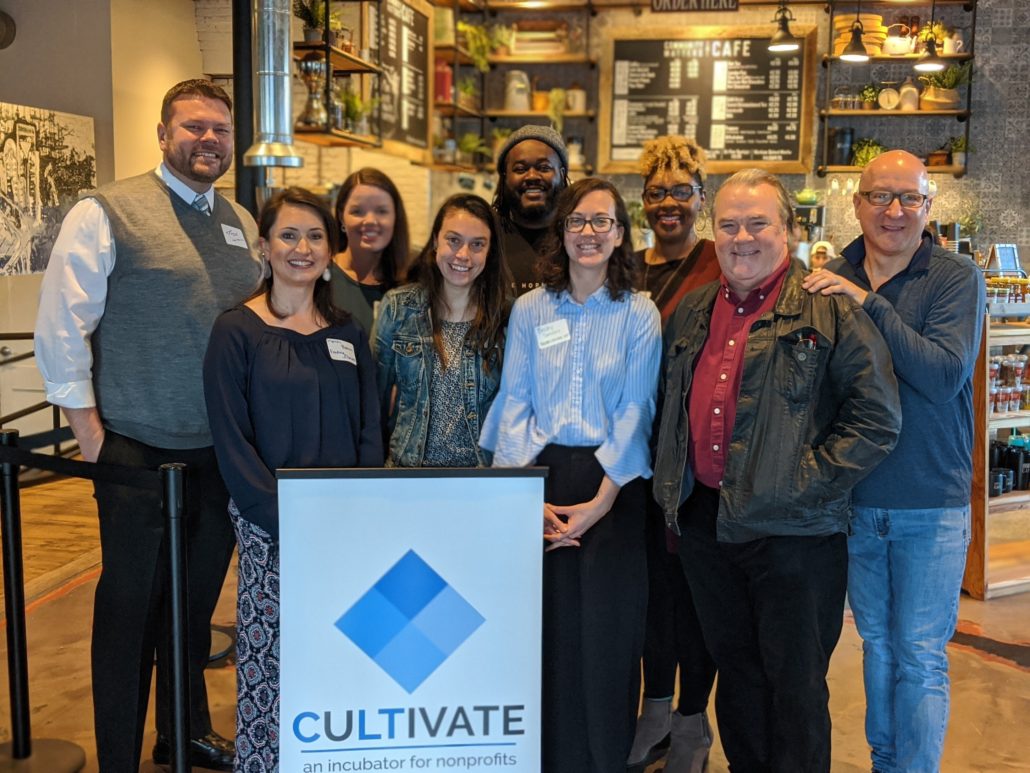
The 2020 Cohort and Charlie Elberson, Reemprise Fund, on March 12, 2020.

Last Friday at noon, dozens of leaders from the local social good community gathered together virtually to celebrate the graduates of the 2020 CULTIVATE cohort. One of our favorite events every year, the annual CULTIVATE graduation is an opportunity to honor and celebrate the six organizations who have completed our intensive year-long incubator for emerging nonprofits.

This year, CULTIVATE graduates include:

  • Ed Price – Chief Operating Officer, Charlotte Rescue Mission (Community Matters Cafe)
  • Mendy Godman – Co-Founder & Executive Director, Feeding Charlotte
  • Becky Santoro – Co-Founder & Executive Director, Foster Village Charlotte
  • Emmanuel & Adrienne Threatt – Co-Founders, Hope Vibes
  • Katie Phillips – Executive Director, Soccer Foundation of Charlotte
  • Charis Blackmon – Executive Director, West Side Community Land Trust

Friday’s event was as different from our 2019 Cohort Graduation as the year that preceded it. 2020 was both a challenge and a call to action for our participants — as Managing Director Josh Jacobson said in his opening words, “last year was a unique opportunity to demonstrate the power of community-embedded nonprofits, at a time when nimbleness and trust built with people experiencing crisis were the building blocks of Charlotte’s pandemic response.”

Leadership in the Face of Change

While the graduation is an opportunity to learn about each organization’s pathway forward, we also reflected on the many ways the 2020 Cohort rose to the challenges of the past year.

We saw Community Matters Cafe, shut down during the stay at home order, build new partnerships to keep students engaged and programming active. Hope Vibes launched not one but two new services — the Hope Tank and Solar Sinks — to increase access to important hygiene items and facilities for our neighbors experiencing homelessness. Foster Village leveraged its community to advocate — successfully — for the needs of foster children and families. Soccer Foundation of Charlotte created an entirely new program for children struggling with virtual learning. The West Side Community Land Trust made deep investments in permanent housing affordability. Feeding Charlotte developed dynamic new partnerships that helped keep catering companies afloat while providing meals to food access organizations.

What’s Next for the 2020 Cohort

What each graduate accomplished during the unprecedented events of 2020 is an inspiring reminder of the deep capacity of early-stage nonprofits, and many attendees resonated with the idea that “emerging” (as we call CULTIVATE cohort organizations) does not mean small impact.

As one attendee shared in the Zoom chat, “CULTIVATE — and each of these remarkable social innovators — is an antidote to anyone worried about our ability to creatively address and solve our toughest challenges.” We echo this sentiment, and encourage the Charlotte community to learn about what is next for the 2020 Cohort and get involved with our innovative graduates by clicking on the links below.

Community Matters Cafe

Website

Instagram

Feeding Charlotte

Website

Instagram

Foster Village Charlotte

Website

Instagram

Hope Vibes

Website

Instagram

Soccer Foundation of Charlotte

Website

Instagram

West Side Community Land Trust

Website

Instagram

Filed Under: Emerging Organizations

Announcing the 2019 CULTIVATE Cohort

December 17, 2018 by nextstage Leave a Comment

Next Stage today announced the selection of six (6) nonprofits for participation in the 2019 cohort of CULTIVATE, an incubator designed to provide expert strategic and relational supports to emerging social cause organizations based in Mecklenburg County. Now in its second year, the incubator focuses on increasing capacity for emerging nonprofits to sustain their operations and helps them build social capital toward achieving their missions and visions.

The pilot year of CULTIVATE served three organizations: Charlotte is Creative (Matt Olin and Tim Miner), Learning Help Centers of Charlotte (Brent Morris) and Promising Pages (Kristina Cruise).   Next Stage has developed an impact measurement strategy to track participant outcomes and will publish an annual report summarizing results from CULTIVATE’s pilot year in February 2019.

The 2019 cohort organizations were selected through an in-depth RFP process and assessment by a selection panel of community leaders, including Dianne Bailey (US Trust), Kellie Cartwright (United Way of Central Carolinas), Jennifer DeWitt (Duke Energy), Charlie Elberson (Reemprise Fund), Blair Primis (OrthoCarolina) and Charles Thomas (Knight Foundation). The panel met in early November 2018 to review applications from over 40 local organizations, making recommendations for the selection of six finalists.

Selection criteria included commitment and leadership potential of participant, mission and programs that are unique, innovative and differentiated from others in local community, alignment with local priorities, initiatives and current events, and the opportunity for impact and organizational strengthening through CULTIVATE involvement.

The 2019 cohort for CULTIVATE includes:

  • Aspire Community Capital (Manuel Campbell, Founder & CEO): ASPIRE Community Capital drives business start-up, growth and expansion by providing training and access to financial products that support wealth creation for low to moderate income entrepreneurs, with the ultimate goal of bringing much needed stability and stimulation to target communities.
  • Brave Step (Crystal Emerick, Founder & Executive Director): Brave Step strengthens adults impacted by sexual abuse by providing meaningful steps on their journey to heal. We design personalized care plans and offer inspiration, education and connection for survivors and their loved ones.
  • Queen City Unity (Jorge Millares, Founder & Executive Director): Queen City Unity drives equity and equality for people of all races, religions, genders, sexual orientations, and socioeconomic statuses in Charlotte, NC through four areas of focus: volunteerism, community engagement, assisting minority families with upward mobility and addressing inequities in schools.
  • Rebuilding Together of Greater Charlotte (Beth Morrison, Executive Director): Rebuilding Together of Greater Charlotte’s mission is repairing homes, revitalizing communities, rebuilding lives. The organization mobilizes community volunteers and contractors to provide repairs that make homes safer and healthier for our neighbors in need.
  • Stiletto Boss University (Jania Massey, Founder & Executive Director): Stiletto Boss University is a youth training program for high-school girls, that uses entrepreneurship as the foundation for teaching the power of collaboration, sisterhood and community impact.
  • Transcend Charlotte (Trey Greene, Co-Founder & Executive Director): Transcend Charlotte’s mission is to promote authenticity, connection, and social justice by empowering transgender individuals and all gender diverse people impacted by oppression and/or trauma.

Kicking-off in January 2019, CULTIVATE will offer these six participating nonprofits in-depth training and coaching on core monthly topics focused on organizational development and strategic business planning.  The curriculum for CULTIVATE includes one-on-one work and personalized coaching with the Next Stage team, online assignments managed through a learning management system, small group workshops for the six participating leaders and engagement activities designed to increase social capital.

CULTIVATE is made possible through the generous support of the Reemprise Fund and the OrthoCarolina Foundation. Next Stage is pleased to have Hygge Coworking on board as its official coworking partner. Participating organizations will receive free membership at Hygge Coworking and have access to Hygge’s West Side location for the duration of the incubator. Next Stage is also proud to have the Children and Family Services Center as a partner for CULTIVATE.

More about CULTIVATE can be found here. 

About Next Stage Consulting:

Next Stage works with nonprofits to develop visions, set goals and create strategies for all aspects of operations, implementing organizational and fund development efforts with an eye toward efficiency and effectiveness. Led by Managing Director Josh Jacobson and Project Manager Caylin Haldeman, Next Stage exists to serve the varied needs of nonprofits in the Carolinas. By partnering with staff and leadership volunteers, the firm’s talented consultants prioritize identifying needs and opportunities, developing a plan to address them and working tirelessly to ensure optimization in pursuit of mission. The firm is dedicated to working with a limited number of nonprofits to guarantee all clients receive expert counsel, specialized strategic and development planning, and in-depth implementation services. Next Stage Consulting is committed to being a different kind of consulting firm, as interested in designing unique solutions as working to see them implemented.

Filed Under: Emerging Organizations

Next Stage Consulting Announces the 2018 CULTIVATE Cohort

December 6, 2017 by nextstage Leave a Comment

Charlotte, NC (December 6, 2017) — Next Stage Consulting today announced the selection of four (4) nonprofit organizations for participation in the inaugural 2018 cohort of CULTIVATE, an incubator designed to provide expert strategic and relational supports to emerging social cause organizations based in Mecklenburg County.

These organizations were selected through an in-depth RFP process and assessment by a selection panel of community leaders, including Dianne Bailey (Robinson Bradshaw), Jennifer DeWitt (Duke Energy), Charlie Elberson (Reemprise Fund), Blair Primis (OrthoCarolina) and Charles Thomas (Knight Foundation).  The panel met in late November 2017 to review applications from 26 local organizations, making recommendations for the selection of four finalists.

Selection criteria included commitment and leadership potential of participant, mission and programs that are unique, innovative and differentiated from others in local community, alignment with local priorities, initiatives and current events, and the opportunity for impact and organizational strengthening through CULTIVATE involvement.

The 2018 cohort for CULTIVATE includes:

  • Frances Hall, Founder and Executive Director of the Beatties Ford Road Vocational Training Center – The Beatties Ford Road Vocational Training Center provides students who are chronically underemployed, unemployed or re-entering the community from incarceration skills in construction enabling them to obtain permanent employment and compete for advancement in the construction industry.
  • Tim Miner and Matt Olin, Co-Founders of Charlotte Is Creative – Known by many as the team behind CreativeMornings, Charlotte Is Creative is dedicated to celebrating the creative spirit of Charlotte and to cultivating, supporting and harnessing the innate creativity of all Charlotteans, for the embetterment of our community and the lives of all Charlotteans.
  • Brent Morris, Executive Director of Learning Help Centers of Charlotte – Learning Help Centers of Charlotte works to break generational poverty by serving low-income apartment residents and their children with holistic program services which build happy healthy communities, empowering the next generation to stay in school and become successful for life.
  • Kristina Cruise, Founder and Executive Director of Promising Pages – Promising Pages provides ownership of books to underserved children and cultivates a lifelong love of reading through innovative classroom programs and the distribution of more than 100,000 free books annually.

Launching in January 2018, CULTIVATE will provide these four participating nonprofits in-depth training and coaching on core monthly topics focused on organizational development and strategic business planning.  The curriculum for CULTIVATE includes one-on-one work and personalized coaching with the Next Stage Consulting team, online assignments managed through a learning management system, small group workshops for the four participating organizations and community engagement activities designed to increase social capital.

Next Stage is pleased to have Hygge Coworking on board as its official coworking partner for CULTIVATE. Participating organizations will receive free membership at Hygge Coworking and have access to Hygge’s West Side location for the duration of the incubator. Next Stage is also proud to have SHARE Charlotte and the Children and Family Services Center as partners for CULTIVATE, and is grateful for the support of the Reemprise Fund.

More about CULTIVATE can be found here. 

About Next Stage Consulting:

Next Stage Consulting (Next Stage) works with nonprofits to develop visions, set goals and create strategies for all aspects of operations, implementing organizational and fund development efforts with an eye toward efficiency and effectiveness. Led by Managing Director Josh Jacobson and Project Development Manager Caylin Viales, Next Stage exists to serve the varied needs of nonprofits in the Carolinas. By partnering with staff and leadership volunteers, the firm’s talented consultants prioritize identifying needs and opportunities, developing a plan to address them and working tirelessly to ensure optimization in pursuit of mission. The firm is dedicated to working with a limited number of nonprofits to guarantee all clients receive expert counsel, specialized strategic and development planning, and in-depth implementation services. Next Stage Consulting is committed to being a different kind of consulting firm, as interested in designing unique solutions as working to see them implemented.

Filed Under: Emerging Organizations

  • Page 1
  • Page 2
  • Go to Next Page »

Primary Sidebar

Footer

Subscribe to the Impact Insider

Your monthly roundup of social good news and trends

only_email

Who we are

What we do

Who we serve

resources

Newsletter

Careers

Let’s work together!

Contact Us

fb
in
ins

© 2026 Next Stage Consulting | All rights reserved | Privacy Policy